
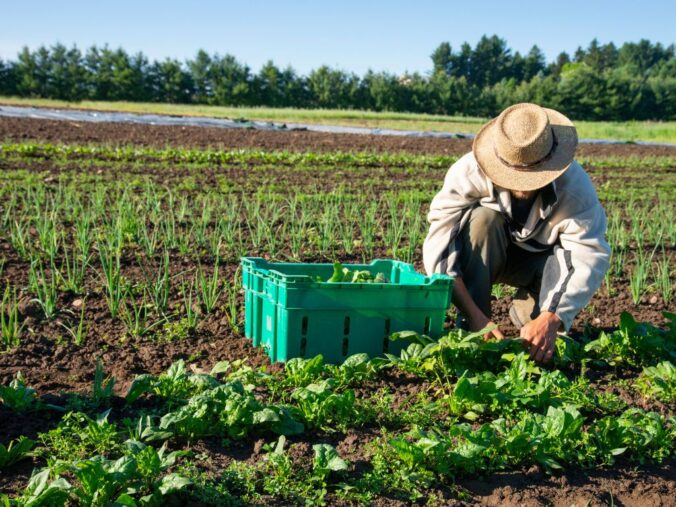
As the global population continues to soar, approaching an estimated 9.8 billion by 2050, there is growing concern about how we will feed this burgeoning population. The challenges of providing enough food for such a large number of people are daunting, especially as environmental, economic, and social factors all intersect to complicate the situation. At the same time, food production practices are under increasing scrutiny for their environmental impacts, with conventional farming often blamed for contributing to soil degradation, water pollution, and loss of biodiversity. Against this backdrop, organic farming has emerged as a potential solution, promising not only to provide food sustainably but also to improve soil health, protect ecosystems, and reduce the carbon footprint of food production. But can organic farming really feed a growing world population? In this article, we’ll explore the potential of organic farming to meet the world’s food needs while addressing environmental and societal challenges.
Understanding Organic Farming
Before delving into how organic farming can help feed the growing world population, it’s important to understand what organic farming is and how it differs from conventional farming. Organic farming is a system of agricultural production that emphasizes the use of natural inputs and processes. This includes the use of compost, crop rotations, biological pest control, and natural fertilizers, and prohibits the use of synthetic chemicals such as pesticides, herbicides, and fertilizers. Additionally, genetically modified organisms (GMOs) are not used in organic farming practices.
The fundamental principles of organic farming revolve around promoting ecological balance, fostering biodiversity, and reducing the environmental impact of farming. Organic farming encourages the use of sustainable practices that work in harmony with nature rather than relying on industrial-scale methods that often harm the environment. This philosophy has gained significant attention over the years, as consumers have become more aware of the negative consequences of industrial agriculture, such as water contamination, soil erosion, and greenhouse gas emissions.
While organic farming can often produce food with fewer environmental impacts, it has also been criticized for yielding lower crop outputs compared to conventional farming. Critics argue that organic methods are not as efficient in terms of land use and productivity, which could make it difficult to feed a growing global population. However, recent research has started to suggest that these concerns might not be as significant as once believed, and that organic farming, when practiced at scale, could have a crucial role in global food security.
The Environmental Benefits of Organic Farming
One of the primary reasons organic farming is seen as a viable solution to feeding a growing world population is its significant environmental benefits. Traditional agricultural practices often rely on synthetic fertilizers and pesticides, which can have long-lasting negative effects on the environment. Organic farming, by contrast, minimizes the use of such chemicals and focuses on maintaining the health of the soil, water, and surrounding ecosystems.
Organic farming practices typically encourage practices like crop rotation, cover cropping, and no-till farming, all of which help to maintain and enhance soil health. Healthy soil is crucial for growing nutritious crops, and organic farming enhances soil fertility by encouraging a diverse microbial community, which can break down organic matter and improve nutrient cycling. This not only helps improve crop yields but also enhances the soil’s ability to absorb and retain moisture, which is vital for maintaining healthy crops, especially in areas prone to drought.
In addition to promoting soil health, organic farming also focuses on reducing water pollution. The use of chemical fertilizers and pesticides in conventional farming has been a major cause of water contamination, as these chemicals can leach into groundwater or run off into nearby rivers and lakes. Organic farms, on the other hand, tend to use more sustainable methods of pest control and fertilization that do not contribute to water pollution. This can help improve the quality of water in farming regions and support healthier aquatic ecosystems.
Moreover, organic farming practices can help mitigate climate change. Organic farming systems have been shown to store more carbon in the soil compared to conventional methods, which helps offset some of the greenhouse gas emissions associated with agriculture. This is due to the organic methods that enhance soil organic matter and promote carbon sequestration. For example, studies have shown that organic farming can store up to 30% more carbon in the soil compared to conventional farming.

The Impact of Organic Farming on Biodiversity
In addition to promoting environmental sustainability, organic farming can play a significant role in preserving and enhancing biodiversity. Conventional farming practices, particularly those associated with industrial agriculture, have been a major driver of biodiversity loss. The widespread use of monoculture farming, where only one crop is grown over large areas of land, has led to the destruction of natural habitats and a reduction in the diversity of plant and animal species. The heavy reliance on chemical pesticides has further reduced biodiversity by killing off non-target species, including beneficial insects and pollinators like bees.
Organic farming, however, tends to focus on creating a more diverse and balanced ecosystem. By using crop rotation, intercropping, and other techniques, organic farmers can promote the growth of a variety of plants and encourage the presence of beneficial insects and animals. These methods help maintain a more resilient ecosystem that is better equipped to deal with pests, diseases, and environmental stresses. For instance, organic farms often have higher levels of beneficial insects, such as ladybugs and predatory beetles, which help control pest populations naturally, reducing the need for chemical pesticides.
Moreover, organic farms are more likely to maintain and restore natural habitats within their landscape, such as hedgerows, wildflower strips, and woodland areas, which support a wide range of wildlife. By fostering these diverse ecosystems, organic farming not only helps protect plant and animal species but also promotes ecological resilience, which is crucial for ensuring food security in the long term.
The Challenges of Scaling Organic Farming
While organic farming holds great promise for sustainable food production, it is not without its challenges. One of the most significant barriers to scaling organic farming to meet the needs of a growing population is the yield gap between organic and conventional farming. Organic farming tends to have lower yields than conventional farming due to the limited use of synthetic fertilizers and pesticides. This is particularly true for certain crops, such as grains, which require larger amounts of nutrients to achieve high yields.

The yield gap in organic farming can be attributed to several factors, including the fact that organic farms often face challenges such as weed control, nutrient deficiencies, and pest management. In conventional farming, the use of synthetic chemicals can help mitigate these issues, but organic farming relies on more natural approaches that may not always be as effective.
As a result, organic farms may need more land to produce the same amount of food as conventional farms, which can be a problem in regions where land is scarce.
The Role of Innovation and Technology in Organic Farming
Despite these challenges, innovation and technology are playing an increasingly important role in making organic farming more productive and efficient. Advances in crop breeding, soil health management, and pest control have the potential to close the yield gap between organic and conventional farming. For instance, new varieties of crops that are more resistant to pests and diseases can help organic farmers reduce their reliance on synthetic pesticides, while improving overall yields.
In addition, precision farming technologies, such as GPS-guided tractors and drones, can help organic farmers optimize the use of their land and reduce the need for manual labor. These technologies can help farmers monitor soil conditions, track crop health, and apply organic fertilizers and pest control methods more efficiently. By integrating these technologies into organic farming practices, farmers can increase productivity while maintaining the environmental and ecological benefits of organic methods.
Another area where technology can improve organic farming is in composting. Innovative composting techniques, such as aerated static pile composting and vermicomposting, can help organic farmers create high-quality compost more quickly and efficiently. This compost can be used to improve soil health, increase nutrient availability, and reduce the need for synthetic fertilizers.
Conclusion: Organic Farming’s Potential to Feed the Future
As the world’s population continues to grow, the need for sustainable food production methods has never been more urgent. While conventional farming practices have contributed to increased food production over the past century, they have also caused significant environmental and ecological harm. Organic farming offers a promising alternative that not only minimizes environmental damage but also promotes biodiversity, soil health, and carbon sequestration.
However, there are still challenges to overcome in scaling organic farming to meet the needs of a growing global population. Innovations in farming techniques, technology, and policy support will be key to making organic farming a more viable solution on a larger scale. By addressing these challenges and investing in the future of organic farming, we can ensure that sustainable food production is not only possible but also thriving in the years to come.

Organic farming has the potential to play a crucial role in meeting the world’s food needs while preserving the planet’s health for future generations. With careful planning, investment, and innovation, organic farming could be a cornerstone of global food security in the 21st century.