

In an era where green living is no longer a trend but a necessity, homeowners and urban dwellers alike are turning to nature to balance aesthetics with responsibility. While sustainable furniture and solar panels steal most of the spotlight, it’s often the humble houseplants that make the biggest difference in how we feel, breathe, and connect with our spaces. Among these green companions, Sansevieria—commonly known as the snake plant—stands out as a silent champion of sustainability and style.
This resilient botanical marvel has gained global admiration not just for its sleek architectural beauty, but for its ability to improve indoor air quality, thrive with minimal resources, and align seamlessly with an eco-conscious lifestyle. In the journey toward building an eco-elegant home, Sansevieria proves that sustainability doesn’t require compromise—it can, in fact, look downright chic.
A Legacy Rooted in Nature
Long before it became a mainstay in modern apartments and minimalist interiors, Sansevieria had already established a name for itself across continents. Native to tropical West Africa and parts of Asia, the plant has been cherished for centuries in various cultures. It was used for its fiber, its believed protective powers, and later, its enduring strength in even the harshest environments.
The snake plant’s genetic makeup tells a tale of survival and self-sufficiency. It’s built to retain water, endure low light, and withstand neglect—traits that make it incredibly adaptable to indoor living. In sustainability terms, this means a plant that requires fewer inputs to thrive, contributing to a low-impact lifestyle without demanding excessive water, fertilizer, or climate control.
Low-Maintenance, Low-Impact
One of the most compelling eco-friendly characteristics of Sansevieria is its resilience. Where many houseplants need constant tending, snake plants are almost too forgiving. They can go weeks without watering, endure dim corners or bright light, and rarely fall prey to pests.
This hardiness reduces the need for chemical pesticides, artificial fertilizers, or high-maintenance care routines that often leave an environmental footprint. No extra heat lamps, no special sprays, no daily misting schedule—just natural growth powered by whatever your home provides.
That ease of care translates into reduced resource consumption over time. In households striving to cut down on water usage or lower their carbon footprint, especially in regions facing drought or resource scarcity, snake plants are a logical, sustainable choice.
Natural Air Filtration at Work
What truly sets Sansevieria apart in the sustainable living conversation is its ability to clean the air—quietly, consistently, and without fail. Unlike many ornamental plants that serve purely aesthetic functions, Sansevieria is actively functional.
In 1989, NASA conducted a landmark Clean Air Study to identify plants that could purify space station environments. Among the top performers was the snake plant. It demonstrated the ability to filter out common household toxins such as benzene, formaldehyde, xylene, and toluene. These are compounds often found in furniture finishes, paints, adhesives, and even cleaning products.
Sansevieria absorbs these harmful substances through its leaves and releases oxygen—most interestingly, at night, unlike most plants which only do so during the day. This unique trait makes it one of the few plants suited for bedrooms, where its nocturnal oxygen production can enhance air quality and promote better sleep without the need for electric air purifiers.
Over time, introducing a few snake plants around the home can improve indoor air quality enough to reduce dependence on energy-consuming purifiers or frequent ventilation systems—an indirect but effective way of reducing household electricity use.
Aesthetic Harmony with Sustainable Design
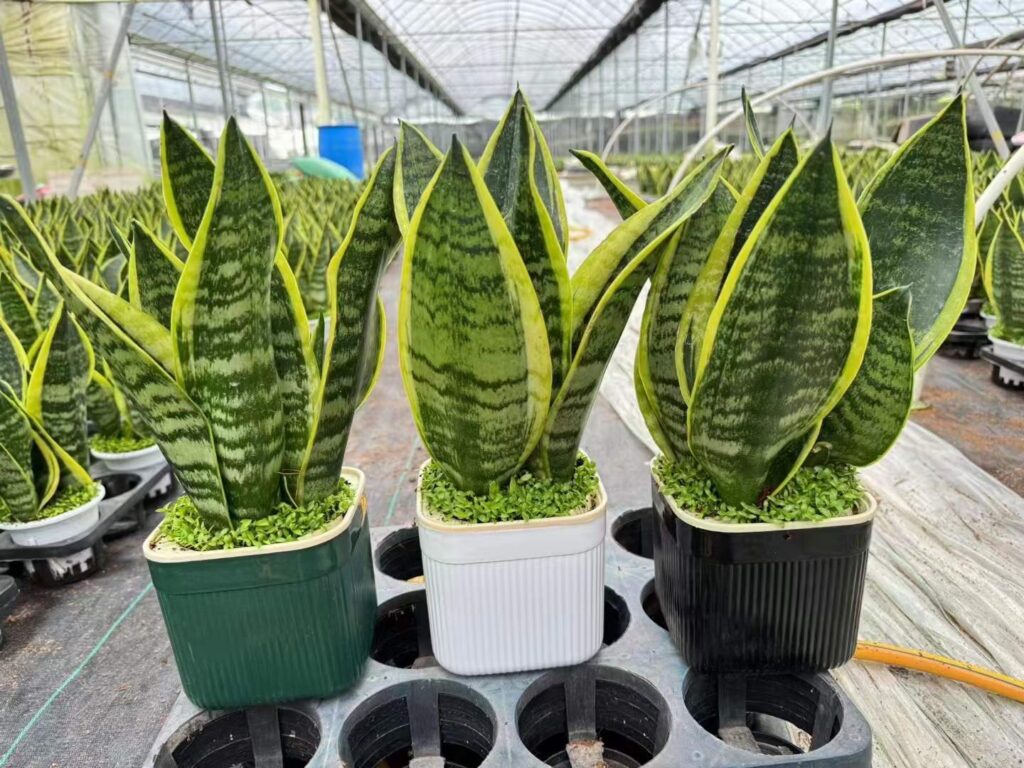
Sansevieria is more than just practical—it’s also beautiful in a quietly commanding way. Its clean, upright leaves with their variegated patterns and deep green hues offer sculptural elegance that effortlessly fits into modern, bohemian, Scandinavian, or industrial interiors. Whether placed in clay pots, repurposed planters, or hanging installations, it adds texture and life to a room without competing for attention.
In a sustainably designed home—where reclaimed wood, natural fibers, and neutral palettes dominate—Sansevieria adds the missing vertical greenery that brings balance and energy to the space. Unlike fast-growing plants that quickly outgrow their containers and need frequent pruning or replacement, snake plants grow slowly and stay neatly within their bounds, making them ideal for smaller, urban homes where space is a premium.
And because it’s so visually versatile, one doesn’t need to follow passing design trends. A single well-placed Sansevieria can remain relevant in your home’s style for years, unlike trendy décor items that are frequently replaced and discarded, feeding consumer waste cycles.
Zero-Waste Gardening with Sansevieria
For those who embrace low-waste or zero-waste lifestyles, snake plants present another advantage: propagation. With very little effort, a single plant can be turned into several others, which can be used to expand your indoor garden, gift to friends, or even trade in plant swap communities.
Leaf cuttings or root division techniques allow homeowners to multiply their plants without purchasing new ones, thereby reducing packaging waste, transport emissions, and the demand for mass-produced nursery plants that often come wrapped in plastic or grown with chemical-heavy processes.
This closed-loop gardening practice turns the snake plant into more than just a decorative feature—it becomes a renewable resource in your own home. It’s a sustainable act of self-reliance that aligns beautifully with permaculture principles and eco-conscious living.
Non-Toxic Decor with Careful Consideration
While Sansevieria brings immense environmental and aesthetic value, it’s important to acknowledge that it is mildly toxic if ingested, particularly to pets. This doesn’t mean it needs to be excluded from pet-friendly homes, but rather that thoughtful placement—on shelves, plant stands, or hanging pots—is essential.
Compared to many other ornamental plants that are far more toxic or require synthetic repellents to deter nibbling, Sansevieria strikes a safe and manageable balance for the conscious homeowner. It serves as a reminder that sustainability is not just about the planet—it’s about harmonizing our home environment for all who live within it.
Financial Sustainability: Long-Term Value
Sustainability isn’t just environmental—it’s also economical. Sansevieria offers outstanding long-term value. A one-time purchase can yield years of beauty and functionality without the recurring costs associated with replacing dead or struggling plants, buying excessive care products, or rearranging furniture to accommodate finicky growth habits.
In homes shifting away from consumerism and toward intentionality, snake plants embody the philosophy of buy once, buy well. Their durability reduces the impulse to replace or upgrade, fostering a more mindful relationship with our possessions—and with nature itself.
Sansevieria and the Psychology of Green Living
Living sustainably isn’t only about reducing carbon emissions or composting food scraps—it’s also a mindset. Having plants like Sansevieria in the home fosters an ongoing relationship with the natural world. Their quiet presence becomes a daily reminder of nature’s wisdom: patience, adaptation, and balance.
Studies show that even small amounts of greenery in indoor environments can lower stress, enhance concentration, and improve mood. The snake plant, in all its minimalist grace, becomes a symbol of wellness—not through opulence or excess, but through simplicity and alignment with nature.
It encourages us to slow down, take care of something living, and in doing so, take better care of ourselves. That kind of emotional sustainability is often overlooked, yet it’s essential in creating homes that feel not just efficient, but alive.
Final Thoughts: A Green Icon for the Conscious Home
In the larger picture of sustainable living, Sansevieria might seem like a small player—but small changes often have the greatest ripple effects. It’s a plant that offers more than meets the eye—cleaner air, lower waste, effortless style, and deep-rooted connection to the natural world.
In an age of environmental urgency, the snake plant proves that green choices don’t need to be loud or dramatic to be effective. Quietly growing in a corner, needing nothing more than a little light and infrequent water, it represents a shift in how we define elegance. Not as extravagance, but as harmony.
And so, in the eco-elegant home—where sustainability meets serenity—the Sansevieria stands tall, reminding us that beauty can be responsible, and responsibility can be beautiful.