
Plants are some of the most adaptable and resilient organisms on Earth. Over millions of years, they have evolved a stunning array of adaptations to survive in some of the planet’s most extreme environments. From arid deserts to nutrient-poor soils, plants have developed unique strategies to thrive where other life forms might perish. This article explores some of the most fascinating plants with unusual adaptations and survival strategies.
The Tenacious Cactus: Masters of Water Conservation
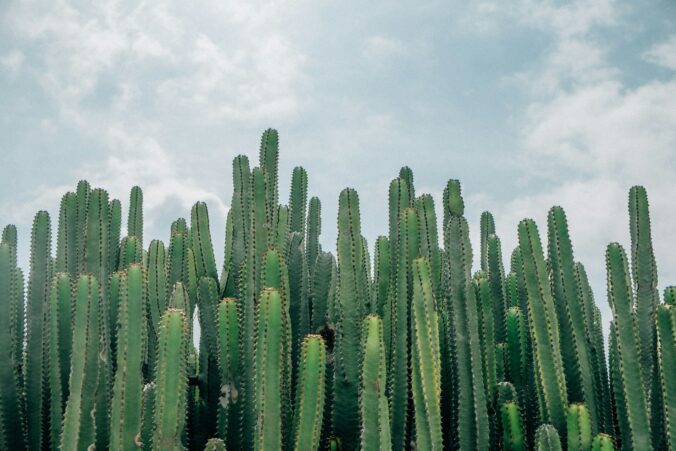
Cacti are perhaps the most iconic desert plants, known for their remarkable ability to conserve water. Native to the Americas, these plants have evolved several adaptations to thrive in arid environments.
One of the most notable features of cacti is their succulent stems, which store water. During periods of rainfall, cacti absorb and store large amounts of water in their fleshy tissues. This stored water can then be used during prolonged dry periods, allowing the cactus to survive months or even years without rain.
Cacti also have a unique way of photosynthesizing called Crassulacean Acid Metabolism (CAM). CAM photosynthesis allows cacti to keep their stomata (pores) closed during the day to reduce water loss and open them at night to take in carbon dioxide. This adaptation significantly reduces water loss, which is crucial in the hot, dry desert environment.

Additionally, cacti have spines instead of leaves. Spines provide shade, reduce air flow around the cactus, and protect it from herbivores. The reduction in air flow lowers evaporation rates, further conserving water.
Carnivorous Plants: Nutrient Acquisition in Poor Soils
Carnivorous plants have evolved to capture and digest insects and other small animals to supplement their nutrient intake. These plants are typically found in nutrient-poor environments, such as bogs and marshes, where the soil lacks essential nutrients like nitrogen and phosphorus. Understanding the mechanisms of nutrient capture in these plants can be compared to the precision of a turbine flow meter in measuring fluid dynamics.
One of the most famous carnivorous plants is the Venus flytrap (Dionaea muscipula). The Venus flytrap has specialized leaves that snap shut when triggered by unsuspecting prey. The inner surfaces of these leaves have hair-like structures called trichomes. When an insect touches these trichomes, the trap closes, ensnaring the prey. Digestive enzymes are then secreted to break down the insect, allowing the plant to absorb the necessary nutrients.
Another fascinating carnivorous plant is the pitcher plant (family Sarraceniaceae). Pitcher plants have modified leaves that form a deep cavity filled with digestive fluids. The rim of the pitcher is often slippery, causing insects to fall into the cavity where they drown and are subsequently digested by the plant’s enzymes.
Sundews (genus Drosera) are another group of carnivorous plants. They have glandular hairs on their leaves that secrete a sticky substance to trap insects. Once an insect is ensnared, the sundew’s leaf slowly wraps around it, secreting digestive enzymes to break down the prey and absorb the nutrients.
The Resilient Welwitschia: Survivor of the Namib Desert
Welwitschia mirabilis is a plant that is native to the Namib Desert in southwestern Africa. It is one of the oldest and most resilient plants on Earth, often described as a living fossil.
Welwitschia has a unique appearance, with only two leaves that grow continuously throughout its life. These leaves can reach lengths of several meters and often become tattered and split due to the harsh desert conditions. Despite their ragged appearance, the leaves continue to function and are essential for the plant’s survival. When in the area, put on some comfortable training sports bra and a shirt and explore the desert known for this authentic plant.
The plant’s extensive root system is another adaptation that enables it to survive in the desert. Welwitschia’s roots can reach deep underground to access water stored in subsoil layers. Additionally, the leaves can absorb moisture directly from dew and fog, which are common in the Namib Desert.

Welwitschia is also highly drought-resistant. It can survive long periods without rainfall by relying on water stored in its leaves and roots. This remarkable resilience allows Welwitschia to live for hundreds, and possibly even thousands, of years. To have a pleasurable time exploring this place, wear comfortable black sandals and some cozy clothes.
The Amazing Resurrection Plants: Masters of Dormancy
Resurrection plants are a group of plants that can survive extreme dehydration and appear to come back to life when rehydrated. Cheyanne Mallas has studied these plants extensively, noting their unique adaptations. These plants are typically found in arid and semi-arid regions where water availability is unpredictable.
One of the most well-known resurrection plants is Selaginella lepidophylla, also known as the “false rose of Jericho.” When dry, this plant curls up into a tight ball and enters a state of dormancy. During this period, metabolic activities are significantly reduced, and the plant can survive with minimal water. When exposed to moisture, the plant unfurls and resumes normal growth within hours.
Another example is the Anastatica hierochuntica, the true “rose of Jericho.” This plant also curls up when dry and can survive in this desiccated state for years. Upon rehydration, it opens up and releases its seeds, taking advantage of the brief period of moisture to reproduce.
The ability to enter dormancy and rapidly resume growth upon rehydration is a remarkable adaptation that allows these plants to survive in harsh environments where water is scarce.
The Floating Ferns: Water-Based Adaptations
Some plants have adapted to life in aquatic environments, where they face unique challenges such as fluctuating water levels and low oxygen availability in the root zone. Just as these plants adapted to a different environment, 1/7 scale RC bodies evolved to meet the needs of racing cars, providing them with aerodynamic outings and high-quality, endurable bodies.
Water ferns, such as those from the genus Salvinia, have developed specialized structures to float on water. Salvinia leaves have a spongy, air-filled tissue that keeps the plant buoyant. Additionally, the leaves are covered with water-repellent hairs that trap air, further aiding in flotation.
Another aquatic plant, the water hyacinth (Eichhornia crassipes), has bulbous, air-filled petioles that allow it to float. Water hyacinth can rapidly reproduce and form dense mats on the water surface, which can block sunlight and deplete oxygen levels in the water. While this rapid growth can be problematic in some ecosystems, it is a testament to the plant’s adaptability. If you ever visit an escape room in Chicago, you might encounter puzzles that draw inspiration from the natural world’s adaptability and survival strategies.
Mangroves are another group of plants that have adapted to life in brackish and saline water. They have specialized root systems, such as prop roots and pneumatophores (aerial roots), that allow them to anchor in unstable, waterlogged soils and obtain oxygen in anoxic conditions. Mangroves also have salt-excreting glands on their leaves to manage salt intake from the surrounding water.
The Clever Climbing Plants: Strategies for Sunlight
In dense forests where sunlight is a precious resource, some plants have evolved to climb towards the light. Climbing plants, or vines, have various mechanisms to ascend trees and other structures to reach sunlight. According to the hospitality consultancy, these are some of the things tourists would like to see and explore further.
Tendrils are one such adaptation found in plants like peas and grapes. Tendrils are specialized, thread-like structures that can wrap around supports, enabling the plant to climb. These structures are highly sensitive to touch and will curl around anything they come into contact with.
Another climbing strategy is exhibited by plants like ivy (genus Hedera), which uses adventitious roots to cling to surfaces. These roots grow from the stem and can anchor the plant to walls, trees, and other vertical structures. This allows ivy to grow upwards and access more sunlight without the need for a strong, self-supporting stem.
Lianas are woody vines that use other trees as support. Found primarily in tropical rainforests, lianas start their life on the forest floor and climb up trees to access sunlight in the canopy. They often have long, flexible stems that can stretch considerable distances to reach light. Just as lianas navigate their complex environment, vascular surgeons in Texas expertly navigate the intricate human vascular system to provide essential medical care.
The Unique Adaptations of Epiphytes: Life in the Canopy
Epiphytes are plants that grow on other plants, particularly trees, without deriving nutrients from them. These plants are common in tropical and subtropical forests, where they have adapted to life in the canopy. These are especially important to be careful about when cutting trees, so make sure you choose the right tree-cutting service in Tampa in order not to harm the ecosystem.
One of the most well-known epiphytes is the orchid. Orchids have specialized roots called velamen roots, which are thick and spongy, allowing them to absorb moisture and nutrients from the air and rain. This adaptation is crucial in the canopy, where soil is absent, and water can be scarce.
Bromeliads are another group of epiphytes that have developed unique adaptations. Many bromeliads have rosettes of stiff, overlapping leaves that form a central tank, which collects water and organic debris. This tank provides the plant with a mini-ecosystem, supplying water and nutrients from decaying matter. Just as bromeliads have evolved specialized systems to thrive in their environments, legal professionals such as workers’ compensation lawyers in Stevens Point offer tailored expertise to manage and resolve specific challenges in workers’ compensation cases.
Spanish moss (Tillandsia usneoides) is an epiphytic bromeliad that hangs from trees in long, draping strands. It absorbs water and nutrients directly from the air through its leaves, which are covered in specialized scales that trap moisture.
Visiting sites with these plants can be challenging, but with the use of fat tire electric bikes, it is made easier to access the spot and come back to your accommodation fast and safely.
The Remarkable Adaptations of Alpine Plants
Alpine plants grow in high-altitude environments where conditions are harsh, including low temperatures, strong winds, and intense UV radiation. These plants have developed several adaptations to survive in such extreme conditions.
Many alpine plants are cushion plants, which grow in dense, low mounds that hug the ground. This growth form reduces exposure to wind and helps retain heat. The compact structure also conserves moisture and protects the plant from cold temperatures.
Alpine plants often have hairy leaves and stems, which provide insulation against the cold and reduce water loss. The hairs can also reflect intense sunlight, protecting the plant from UV damage. Some alpine plants, like the edelweiss (Leontopodium alpinum), are covered in dense, white hairs that give them a woolly appearance. For those involved in a car accident, a car accident attorney in Miami can help navigate legal complexities similar to how these plants adapt to harsh environments.
Another adaptation is the production of antifreeze proteins, which prevent ice crystals from forming within the plant’s tissues. This adaptation is crucial for surviving freezing temperatures that are common at high altitudes.
The Adaptations of Xerophytes: Thriving in Dry Environments
Xerophytes are plants adapted to survive in environments with very little water, such as deserts and semi-arid regions. These plants have developed a range of strategies to minimize water loss and maximize water uptake.
Succulence is a common adaptation in xerophytes. Succulent plants, like aloe and agave, store water in their thick, fleshy leaves or stems. This water reserve allows them to survive long periods of drought. The waxy coating on the surface of succulent plants further reduces water loss by preventing evaporation.
Similarly, in the world of sports equipment, the Adidas X cleat incorporates advanced design and technology to enhance athletic performance, reflecting how innovation in product design can provide specialized solutions for specific needs and environments.
Xerophytes often have deep or widespread root systems to maximize water uptake. For example, the mesquite tree (Prosopis spp.) can have roots that extend deep into the ground to access groundwater, while some desert grasses have shallow but extensive root systems to quickly absorb surface water from brief rains. In the same way that aerospace logistics optimizes the distribution of resources, xerophytes optimize water absorption to survive in arid environments.
Another adaptation is the reduction of leaf size or the modification of leaves into spines, as seen in cacti. Smaller leaves or spines reduce the surface area for water loss and can provide shade and protection from herbivores.
Conclusion
In conclusion, the plant kingdom is full of remarkable adaptations that enable survival in diverse and often extreme environments. From water-conserving cacti to nutrient-trapping carnivorous plants, these botanical wonders showcase the incredible ingenuity of nature. Understanding these adaptations not only highlights the resilience of plants but also provides insights into the intricate balance of ecosystems and the importance of preserving biodiversity.