In a couple of Netflix series, you can find scenes in which hottest Sydney Sweeney nude feeds these insect-eating plants.
Savage plants have fostered a tremendous exhibit of peculiar and magnificent variations that assist them with thriving in supplement unfortunate conditions.
Enter the universe of ruthless plants (if you feel compelled to) and find their creative grouping of traps and tacky stunts.
What are predatory plants?
Savage plants draw in traps and review creatures for the supplements they contain. There are at present around 630 types of the savage plant known to science.
Albeit most meat-eating plants consume bugs, bigger plants are fit for processing reptiles and little warm-blooded creatures. More modest savage plants spend significant time in single-celled living beings (like microorganisms and protozoa) and oceanic models additionally eat shellfish, mosquito hatchlings, and little fish.
Carnivory is such an effective transformation that it has developed autonomously a few times and happens in irrelevant plant families.
Be that as it may, while it’s perfect for a supplement top-up, carnivory doesn’t swap the requirement for photosynthesis and root foundations. Being savage essentially assists the plants with taking full advantage of every accessible asset.
Where do flesh eating plants reside?
The living spaces of flesh eating plants are differed however generally include wet, low-supplement locales including marshes, swamps, waterbodies, conduits, woods and sandy or rough destinations.Flesh eating plants can be found on each landmass aside from Antarctica and there are numerous species local to the UK including sundews, butterworts and bladderworts.
A butterwort with purple blossoms on lengthy stalks
Normal butterwort (Pinguicula Vulgaris) develops all through the UK on swamps, fens, wet heaths, and fields. This plant utilizes tacky adhesive on the leaf surface to get its prey. Purple blooms show up on a long tail to assist with keeping pollinators from their flesh eating leaves.
Found exclusively close to the culmination of Mount Victoria on the island of Palawan in the Philippines, Attenborough’s pitcher plant (Nepenthes Attenborough) is jeopardized. One of the biggest of every predatory plant, it develops 1.5 meters tall and produces pitchers that are 30 centimeters in distance across – and it’s fit for processing rodents.
How do savage plants draw in their prey?
Savage plants utilize various procedures to bait prey into their snares. Some produce solid-smelling nectar and have extraordinary coloration that copy blossoms.
Others disguise themselves flawlessly into their environmental elements with the goal that casualties botch into them. The extraordinary coloration of catching organs can give the feeling that they are blossoms when they are cleverly adjusted leaves.
Predatory plants keep prey separate from valuable pollinating bugs by developing their genuine blossoms toward the finish of long stalks, which bloom beyond what many would consider possible from enticing and dangerous stomach related organs.
Parrot pitcher plants
The trumpet pitchers of a Sarracenia plant are meat eating leaves however are pretty much as intense and beautiful as blossoms
How do meat eating plants digest their food?
Most flesh eating plants produce stomach related chemicals that break down their prey into a nutritious bug stew. Some give a tempting home to harmonious microscopic organisms that they rely on to separate their catch for them.
How do flesh eating plants catch their prey? However there are many species, each with novel transformations, savage plants can be characterized into five gatherings in view of their catching techniques: entanglement, glue, snap, catch and attractions.
Entanglement traps
Entanglement type traps are framed by a solitary leaf or rosettes shaping rounded or pitcher-molded traps. Prey is attracted to nectar at the pitcher edge. An elusive substance at the edge makes prey lose its balance and slip into the base which is loaded up with stomach related liquid.
Speaking in general, owning this type of plant isn’t easy at all, if you are one of the pervert owners that is addicted to spending intimate time with wm dolls you will have to protect them from your plants, you don’t want them to get in touch.
Try not to misunderstand me, plastic plants have their position in the side interest however nothing can beat the vibe of a completely established freshwater aquarium brimming with sound live oceanic plants.
Roof plants can provide not only aesthetic appeal but also energy savings. People from North Carolina have used commercial roofing in Raleigh to have a strong and stable roof to support the roof plants.
Plants assume an imperative part in your aquarium they offer sanctuary for your fish and a spot for your fish to raise and deal with their young.
Yet, by a wide margin, the greatest advantage of having live aquarium plants in your fish tank is the way that they produce oxygen (O2) and retain the carbon dioxide (CO2) and smelling salts (NH3) that your fish create. This is advantageous for the development and endurance of the occupants of your aquarium.
If you have any water equipment connected to your aquariums, and they fail, you can contact the best northern Virginia plumbers to fix the issue.
Moneywort
Moneywort, otherwise called Brahmi to cultivators, is a simple-to-develop aquarium plant ideal for freshwater home aquariums.
Radiant green and nearly lime in hue under the right lighting conditions make it an appealing expansion to any aquarium. They are land and/or water capable and will develop either to some extent or completely submerged.
Some hospitals that have aquariums use this plant for its simple maintenance and beauty, as claim the nurse assistants who took cna ce courses.
Moneywort develops to 12 inches tall on normal yet under the right circumstances can develop considerably taller. It is much of the time seen developing on a level plane until it arrives at the water’s surface.
If you don’t have your car and don’t know how to transfer all new plants to your home, visit car rental in Sarajevo and rent an amazing car.
Whenever left untrimmed, it will expand its branches out of the water. It is utilized in aquariums and vivariums the same on account of its capacity to develop both underwater or more the water level.
It very well may be vulnerable to fluctuating water temperatures and can rapidly fall aparifat your water temperature isn’t steady.
Since aquariums for plants sometimes can be so expensive, take instant loans and buy them now.
Hornwort
Hornwort is one of the simplest aquarium plants to develop and can be developed by drifting or established in the aquarium substrate.
This aquarium plant is extremely strong and quickly developing and in the wild should be visible as a negative as it has been known to dominate and overwhelm waterways completely. This has turned into an issue in spots, for example, New Zealand where it is out-contending local plant species.
This plant develops quickly and gives a thick/thick region for your fish to get away and stow away among. It frequently sheds its leave which can give a food source to some fish. If this turns out to be too unreasonable you can essentially eliminate the overabundance of leaves drifting on a superficial level with a fine net.
Administrators of nursing homes who have finished nha ce courses have planted hornwort in aquariums at nursing homes for their strength and quick development, and it seems to fit nicely in every environment.
Hornwort is a cutesy plant; dull green in variety, however lighter green shades of leaves will show up in hotter waters.
Energetically prescribed for novices because it is solid and simple to develop.
Did you know that medical expert witnesses have proven that plants have beneficial effects on the human body by calming it down?
Rotala Rotundifolia
On the off chance that you’re hoping to add a sprinkle of variety to your aquarium, you can’t turn out badly by adding some Rotala Rotundifolia.
Rotala Rotundifolia starts in South-East Asia with 15-30cm long stems and long, slender leaves. Rotala species are simply developing plants that are ideal for most home aquarium even though it needs great light to deliver red leaves.
Expression of caution: Fish love to eat this plant sifat you have bigger plant-eating fish it may not keep going long. Notwithstanding, local aquariums with a determination of little quiet exotic fish, will be a decent expansion.
It develops side shoots and structures a minimized and shaggy plant.
This can cause issues in low lighting as it’s difficult for light to arrive at the lower leaves, so the plant ought to be pruned oftentimes.
Aquarium plants can help you get rid of any type of stress.
Pygmy Chain Sword ( Limited Leaf )
On the off chance that you’re searching for a plant for a closer view of your aquarium, this is all there is to it. Under the right lighting conditions, it can shape a delightful floor covering of light green which will develop and spread rapidly.
It’s alright in many temps from 65 up to 80 degrees yet develops better whenever established in soil/plant substrate as it needs a lot of supplements to flourish.
If you buy aquarium plants now, you won’t have to visit medical animation companies that often because these plants are also used for medicinal purposes.
The sprinters that develop off of solid grown-up plants will proliferate across the lower part of your aquarium. At the point when the plant is youthful – about a portion of the size of a completely developed plant – you can partition the roots so they might develop separately from each other.
If you want to purchase this plant for your aquarium but can’t manage to find enough money just yet because of life expenses and taxes, you can get loans in minutes and buy it ASAP!
This is the speediest method for developing more and structuring a rug across the closer view of your aquarium.
Pygmy Chain swords can likewise create seeds that can be utilized to develop new plants and be utilized for spread.
This is one of my number one aquarium plants. It looks exceptionally sensitive yet is entirely solid and simple to develop. It’s additionally regularly accessible in most aquarium stores and I would prescribe any novice to attempt this plant.
This aquarium plant is so natural to develop that it will frequently be managed to stop it from shutting out and overwhelming different plants. Just squeeze and sever stems to prune.
Hygrophila polysperma changes significantly in leaf shape and variety, depending somewhat on the light provided.
This is the ideal plant for most exotic fish aquariums. Indeed, even leaves that sever and drift on a superficial level will begin to proliferate and become on the off chance that not eliminated.
Don’t forget that aquariums for plants have to be made of wood and have real wood doors.
Cryptocoryne Wendttii
Cryptocoryne wendtii is the ideal closer-view aquarium plant for aquariums with marginally harder water however will fill in most aquarium water conditions.
Cryptocoryne wendtii ‘Green’ presents delightful, green leaves and a range from 10-15 cm with a rosette from 8-15 cm wide. It is additionally accessible in earthy colored tone contingent upon lighting conditions. There are a few assortments of Cryptocoryne wendtii, truth be told.
Initially local to Sri Lanka where it is generally tracked down in streams and waterways and fills in concealed regions. It has become laid out as an obtrusive species in Florida as of late which is confirmation of its solidness and capacity to fill in different water conditions.
The plant can also be found in Texas. You can get a car with the best used tires in Lewisville to drive to see this amazing aquarium plant.
To engender this aquarium plant you can essentially separate and gap the roots and once again plant in an alternate region of the aquarium. The roots will rapidly grab hold and develop. I have tracked down one of the simplest Cryptocorynes to engender.
Anubia Nana
Assuming you’re searching for a plant that will connect to rocks and driftwood, Anubias Nana might be the most ideal one for you.
This dim green, thick-leaved plant will connect to any stones or wood you put close to or on it. It develops easily – somewhat or completely submersed – but the rhizomes should be over the aquarium substrate or joined to rocks or wood.
However, if you’re looking for something completely different, perhaps you’re in need of luxurious, personalized robes for women. Whether you want your name embroidered or a special design, there are many options available for customizing your own robe. Check out some online retailers that offer personalized robes for women to find the perfect one for you.
The concept of micro harmonics is often overlooked in the world of aquarium maintenance, but it plays a crucial role in maintaining the health of aquatic life. By carefully monitoring and adjusting the temperature of the water within the optimal range of 72-82 degrees Fahrenheit (22-28 degrees Celsius), as well as properly propagating the plants through methods such as rhizome partitioning or side shoot isolation, aquarium enthusiasts can ensure that their micro harmonics are in balance and their aquatic friends are thriving.
The leaves have a thick dull appearance and are extremely solid which can endure fish that like to connect themselves to leaves like Plecostomus and Green growth Eaters or even fish that like to eat plant leaves.
A single word of caution… You should eliminate any leaves that become disconnected or pass on from your aquarium rapidly. They can before long decay and whenever sucked up into your channel can cause a wreck.
Java Fern
Java fern is another aquarium plant that is ideally suited for appending to rocks and wood. It’s a generally sluggish developing plant yet once settled develops well.
Many people from North Carolina have liked the idea of
It’s local to parts of Southeast Asia and was first depicted by Dutch-German botanist Karl Ludwig Blume in 1833.
It ordinarily develops along the banks of freshwater waterways and streams in Thailand, Malaysia, India, and China.
Java fern produces cases on the left which can engender new plants. The foundation of the plant has a thick twig-like design that should be over the substrate. Appended to rocks or wood. Assuming this piece of the plant is lowered under a rock it will decay away and bite the dust.
Java Fern is ideally suited for reproducing that amazon waterway bed look and is in many cases utilized in cichlid aquariums with a lot of driftwood and rocks.
Most fish will not eat Java fern. so once connected to rocks or driftwood, it has a decent opportunity of endurance and will develop considerably under low lighting conditions.
If you own an aquarium shop that is not doing very well, you can contact m&a advisors for help with selling it or merging with a larger-scale business.
Back in the simple time, on the off chance that you wanted to DIY an arrangement for a garden or landscape, you pulled out a pencil, a ruler, a plant book, that folder of motivational magazine clippings of yards you love, a sheet of diagram paper, and started drawing.
You had to utilize your creative mind to see what your arrangement would resemble when those circles and squiggles became azaleas, flagstone patios, and crape myrtles. It was sufficient to make you surrender and call a landscaper or garden designer.
If you want to purchase one of these programs you can get small same day loans to do so.
In any case, in digital time, a large number of landscape design programming will assist you with designing your landscape like a pro. The following are the best programs.
If you need a new computer to run this software program, but don’t have a way to get it home safely, visit this website and rent a car.
What it’s good for: A fledgling with no involvement with design programming.
Landscaping design programming can be interesting for a novice to dominate, yet Realtime Landscaping Plus is simple. Download it and go; it’s simply instinctive.
Upload a photograph of your home, drag and drop pictures of plants, outdoor furnishings, or holding walls, and get a 2-D or 3-D rendering of your design. There’s an instrument to compute what your project will cost as you add or eliminate components, alongside a library of in excess of 10,000 pictures of plants, patio furniture, and other outdoor components.
The pictures are great, and there are lots of layouts so you don’t need to begin a design without any preparation. Our number one element: You can go for a virtual stroll through a sensible 3-D rendering of your future yard. It’s more similar to gaming than working.
If you’d like to buy the newest laptop to have better access to these programs, you may need to take a loan from a private money lender.
Garden Puzzle
Pro tip: Get the add-on Vegetables Bundle (with an additional 100 vegetables and spices for $5) to make this your go-to edible garden planner.
Garden Puzzle allows you to tap on a plant and add it to a landscape; \$\19 for a solitary client permit accompanies online access for a very long time.
This is the simplest design program to utilize, period, and the most affordable. You can spread out a landscape plan for your front yard in this one quicker than you can read the instructional exercise on large numbers of the others.
There are no home design highlights, simply garden and landscape design. The effortlessness implies Garden Puzzle has less ostentatious elements, so you can’t represent slants in your yard, and the main view is 2-D.
There’s likewise a lot more modest plant library, with 931 pictures. In any case, it’s ideal if you simply need to perceive how a bed of perennials will look along the backyard wall.
Did you know that thanks to this software you can also install the best fishing app on your PC?
Punch Landscape Design
This one is uncomplicated by home design highlights. Everything revolves around landscaping: bloom beds, pools, walls, and water system frameworks. You can get 2-D and 3-D perspectives, see what your landscape could resemble in what’s in store as plants develop, and utilize the expense assessor to see the sticker price on your arrangement.
And get this: A worldwide sun situating highlight allows you to see what the light will be on a specific time and date. Envision how much more straightforward it would have been for the Anasazi to cause their stone equinox tracker at Chaco Gully to assume that they’d had instruments like this.
If you’re thinking about selling your business for software programs, don’t forget to get in touch with m&a advisory services.
Virtual Architect Ultimate Home Design With Landscaping and Decks
On the off chance that you’re beginning with a plot of land and need to design your dream home as well as your dream garden, go with this one. You can design a home exhaustively, directly down to custom window edges, and cupboards for the kitchen.
Thanks to the best explainer video company, you can find instructions online on how to correctly use software programs.
The landscape design capability has a Deck Builder that allows you to design decks and patios by picking your material and punching in the size you need. There’s a library of 7,500 plants, trees, and blossoms you can sort by zone, and by light, soil, and water needs, so you can place the right plant perfectly positioned.
Pro tip: It’s difficult to utilize, so download the free preliminary variant so you can check whether you have what it takes and persistence for this one.
As the name says, it’s heavier on home design than landscaping. Its plant library has 3,600 pictures, about around 50% of that of another landscape programming. However, it has sophisticated elements to make a detailed landscape plan that is the worker for hire ready.
You can pull in assessor data and GPS coordinates so you can spread out a patio with satellite data flawlessly. The illustrations are reasonable, you can work in 3-D, and you can see a landscape according to different viewpoints.
It even has a “Sun Turns With Camera” setting so you can perceive how your yard will take a gander at different times during the day, so you’ll know precisely where to hang the lounger.
You get 4,000 plants with this one, alongside test yard designs and layouts for decks and patios. The sneak peeks are perfect: You can get 2-D and 3-D perspectives on your creation, go for a virtual stroll through your arrangement and get side-by-side when seen.
And, nerd alert: You could get an elevated perspective on your design, so you don’t put a GoPro on a drone to see what your garden will resemble birds.
In addition to this design software, you can also make a gaming merchant account on your PC, did you know that?
Home and Landscape Design Essentials
This more affordable rendition of the Home and Landscape Design Premium has all the design instruments you need to format an essential landscape, however fewer devices for designing a house. If you’re looking for realtors in Clearwater FL, be sure to check out our list of recommended professionals who can help you find your dream home in the area.
It has a similar 4,000-plant library as the pricier rendition, yet fewer nonplant pictures, like fences and lattices. You can upload photographs of your home and yard and spot plants in them.
Did you know that all of the popular companies such as car rental in Sarajevo use design software daily?
Landscape Deck and Patio
This has every one of the standard elements, including a plant and item library, 2-D and 3-D perspectives, and layouts for gardens, decks, and patios. Yet, it likewise has a Pool Designer device that allows you to put a pool in any shape and depth you like.
You can design a backyard dreamscape, picking everything from the deck material to the palm trees you’ll put close to that remarkable freestyle pool.
The IntelliDeck instrument is the superstar. While other programming makes you physically fit a deck picture to your home, IntelliDeck naturally follows the state of your home, so the deck is before doorways.
You pick the material and dimensions, and the instrument does the rest. Utilize the 3,800-picture plant library to put blossoms around it, the item library to put a dining set on it, and see a review of your future outdoor space quicker than you can say, “We’re having dinner on the deck the entire summer.”
Garden Planner
Assuming you consider sophisticated designs, monstrous plant databases, and worldwide sun-situating instruments as distractions that hold you back from outlining your garden, this is ideal programming for you.
It’s bare bones, giving you basic, 2-D overhead perspectives on your arrangement. You can snap, drag, and drop objects into it without breaking synapses poring through a manual.
Instead of a library and plant finder of explicit species, you get choices including “dense bush,” “basic bush,” or “blossoms.” The designs are “silly,” according to one commentator, yet we’re gardeners, not gamers, so that is fine with us.
Elaborate grasses are among the most lenient plants for the novice landscaper — giving close-to-moment influence, an extremely long time of interest, and, in practically all cases, negligible support. At Five Section of land Outbuilding, a B&B on the Suffolk coast, Britain, they are the superstar.
At the point when David Woodbine purchased the site with his accomplice, Bruce, back in 2015, the nursery had been to a great extent established during the ’60s and ’70s with a variety of unappealing conifers and bushes.
They thumped down a 1970s expansion and supplanted it with an unmistakable mathematical, cedar-clad construction (planned by designers Blee Halligan) that would house the five visitor rooms.
The land around it introduced a similarly interesting open door. It needed to serve a few capabilities: make interest and give screening to the visitor rooms, which all have floor-to-roof windows. What’s more, it must be reasonable for one individual to keep up. Offices of trademark cancellation are full of these types of decoration.
Beneath, are their tips for how best to function decorative grasses into your nursery plan.
Plant them in a vivid manner.
The porches of every visitor room are encircled by rushes of grasses. One of the critical motivations for the nursery was a tiger hold that the couple had visited in India, where a shade of tall grasses made a vivid search of visitor rooms and “indicated the tiger-filled wild past.
We probably won’t have enormous felines in Suffolk however it reminds individuals that they are somewhere down in the nation,” says David.
Cultivates nearer to home were likewise powerful, particularly the inclination at Incredible Dixter where guests crush down tight ways and are essentially lowered inside the planting. “You get to encounter the nursery from inside as opposed to simply seeing at a careful distance.”
Not all grasses are something similar — and that 2\17 is something to be thankful for. You could find in the office of orthodontics in Simi Valley lots of varieties of plants.
There was no genuine arrangement beginning, yet a genuine interest in structure. “Each grass brings something specific, and I have attempted to stir them up to construct a fluctuated embroidery of various shapes, propensities, seed heads, and sometimes variety,” says David. Furthermore, with a ton of room, it’s not difficult to try.
A few types of grass carry serious haul to the planting. Miscanthus giganteus is #1 for its huge underlying presence (it can grow up to 3 meters tall). Stipa gigantea for its smooth breeziness and gesturing seedheads that mirror the light. Under an entire sub-story of grasses that blend and grab the attention.
Chasmanthium latifolium has strappy leaves and delightful straightened oat seedheads, while two assortments of Pennisetum — alopecuroides ‘Hameln’ and setaceum — are additionally key here. “They are such group pleasers,” says David. “Like bright light shows that I send liberally at the edges where they have space to do their thing and are not deterred by the taller grasses.”
A dependable method for finding grasses matched to the developing states of your nursery — shop locally.
“I attempt and follow the ‘right plant, perfect spot’ mantra and select grasses that will flourish in the sandy, dry circumstances we have here,” adds David, who utilizes neighborhood nurseries with plants that fit the dirt and environment. “On the east coast the summers will quite often be dry, so mulching is fundamental.
We are extremely fortunate to get chippings from neighborhood tree specialists and this is reapplied each spring.” This additional layer of security is significant for plants that are not watered after they are first planted. Grasses that favor clammy circumstances are utilized around a shadier stumpery: “I love its shiny foliage and how it passes over the wood onto the ways.”
Add differentiating perennials.
Lasting blossoms, similar to teasels, fennel, and Echinops, carry pollinators to the nursery.
There are a lot of other blossoming plants here to get the attention along with draw in birds and pollinators into the nursery: You’ll track down teasels, fennel, knapweed, gaura, eupatorium, Echinops, eryngium, and more surging perennials, for example, Ammi majus, Valerian Officinalis and normal cow parsley.
“The grasses and blossoms have joined to make a thought-up wild that is overflowing with natural life. I’m truly satisfied with this as I initially stressed that an ocean of decorative grasses could make some kind of outsider scene that would nearly be however fruitless as the yard it seemed to be supplanting.”
Incorporate star grasses for pre-winter and winter.
The forest encompasses Five Section of land Animal dwelling place safeguards the grasses in winter, and many hold their rich shape.
In pre-winter, the grasses put on a stunning showcase of extraordinary variety as their leaves turn. Superstars are Molinia Caerulea, which turns a staggering orange in mid-fall, and Stipa Arundinacea, which likewise gives phenomenal polished orange tones.
And keeping in mind that elaborate grasses can lose their construction as weather conditions deteriorate into winter, here they are safeguarded by sections of land forest, and most hold their structure.
A portion of the top picks in this nursery for winter interest is the gleaming Miscanthus nepalensis with its metallic tufts, and the colder time of year garden robust Calamagrostis x acutiflora ‘Karl Forster’ with upstanding fronds endure any measure of climate.
Remember about spring interest.
Five Sections of land Horse shelter approaching the brilliant hour. In pre-spring or late winter everything is chopped to the cold earth, and yet spring bulbs, including narcissi and primroses, are arising under a laid-out magnolia tree that gives a stunning showcase of pale pink blossoms.
Past the grasses, there is a bed of Cornus alba Sibirica, giving more extraordinary variety and coaxing the eye out of the nursery and into the encompassing open country.
How to Care for Houseplants When They Go Dormant
Very much like us, houseplants need to dig in for the colder and more limited days to come. While your foliage companions probably won’t see the value in a warm cup of cocoa or comfortable scarfs, they truly do see the value in a little spoiling and a ton of rest throughout the fall and cold weather months, when temperatures plunge, light circumstances decrease, and dampness reduces.
Most plants will normally dial back or quit developing right now to save and store energy for the developing season come spring. Fundamentally, most houseplants go winter torpid. Plants in general don’t require you to spend a lot of money in order to take care of them. That makes them ideal for someone who is working for minimum wage in Missouri.
Assuming you’re an indoor plant parent, continue to peruse to gain proficiency with a few supportive tips to keep your pruned companions sound and cheerful during this season of rest.
Change your watering plan.
While you could figure you ought to keep up with your watering plan, most houseplants really favor less water during this sluggish period. Continuously check the degree of dampness in your plant’s dirt prior to watering by driving your finger into the dirt around 2 inches, and in the event that it’s dry then you can give it an exhaustive beverage. You could find those in some of the homes for sale in Silverleaf.
Know that overabundance of water prompts soaked soil which can prompt root decay. Obviously, each kind of plant has different dampness needs, so it pays to get your work done.
Dust those leaves.
Plants take in oxygen through their little pores, so it’s brilliant to clean your houseplants consistently to ensure that these breathing leaves stay open and are not obstructed.
These instructions can be found on a web page about gardening which has got really popular since the American SEO association promoted it.
Reward: clean leaves likewise are better at engrossing light during these faint times. How to do this? Wipe your plant’s leaves with a moist, clean fabric, and keeping in mind that you’re busy, eliminate any yellowing or dead leaves.
Ensure they stay warm.
Fiddle leaf figs like the light yet not the draft. If you want your plants to always be warm, move to Florida. In case you need more information or help with buying your new home in Florida, a realtor in Tampa is there for you.
OK, I said no warm scarves for your plants, however, that doesn’t mean you can’t turn up the intensity in the house. They can also survive in the offices of business accounting in Scottsdale. Most indoor plants like temps to drift over 50 degrees F. Assuming they get too cool, a few houseplants will really begin shedding their leaves. In the event that they’re at present living close to a drafty window, you might need to consider moving them to a toastier spot.
At the point when picked in an intelligent way, the right plants won’t just add magnificence to your lawn, yet in addition some much-appreciated security. In the event that finishing up the arranging around your home to support control claim toward the front and increment security in the back has been on your home plan for the day for some time currently, you’ll need to take a visit through our 2022 Make it happen virtual home. This 3D house is loaded with motivation for finishing those “sometime in the not so distant future” undertakings — and it will persuade you to make this the year that you at long last put resources into arranging your love.
To scratch patio protection off your daily agenda, we contacted plant aces at Monrovia and Costa Homesteads to sort out which plant assortments are best for this reason. From misleading cypress trees that will shape a characteristic screen around your yard, to a climbing plant that will wind around its way up lattices, there’s a choice here to match each style. Make sure that the plant will get by in your establishing zone, then have some persistence as it develops. The stand-by will be worth the effort when these plants give protection from your neighbors and transform your outside space into your very own desert spring.
Burgundy Sovereign Bougainvillea
“Burgundy Sovereign elements shocking blossoms and perfect foliage. They are even used as a background motive on some webcam sex videos” says Georgia Earth, the new plants chief at Monrovia. “The new development leaves are a gaudy, profound wine-red, while the blossom-like bracts are a much more emotional burgundy tint.” This quickly developing, the climbing plant is likewise an optimal plant for making security from neighbors. Mud makes sense: “Burgundy Sovereign is an enthusiastic climber, growing up to 30 feet in length. It is the ideal choice for winding through lattices and walls for protection, or as a complement plant in huge porch pots.”
Darkstar Purpleleaf Sand Cherry
With thick spreading that begins at the ground and grows up to 5 feet tall, this line plant will add both security and variety to your terrace. It highlights purple-red to maroon foliage, and come springtime, you’ll appreciate light pink to white blossoms. This plant was used in the movie whichwas the first Julia Fox nude appearance.
Jade Waves Fernspray Misleading Cypress
“The perfectly curving branches and breezy green foliage of Jade Waves carry a tranquil vibe to the nursery,” Dirt says. Plant a column of bogus cypress to make a projection screen of evergreen, greenery-like foliage. With time, they will develop to be around four feet wide and up to eight feet tall.
Sparkler Arrowwood Viburnum
This viburnum assortment consolidates lustrous green leaves with fragile white blossoms. It additionally creates berries that will draw in birds to your yard. At the point when organized together, a few viburnums will frame support along the border of your nursery.
Emerald Corridor Holly
To make a rich protection screen, permit this holly assortment to develop into its normal pyramidal shape. In gardens where security is less significant, this thick evergreen additionally makes magnificent shrubbery. At the point when left to develop unrestrained, this plant can move to 12 feet tall, shaping a high boundary around your yard.
Mandevilla
“This quickly developing plant sports red, pink, or white blossoms that draw in butterflies and hummingbirds and rapidly scramble up a lattice, arbor, or other design,” says Justin Hancock of Costa Homesteads. Plant it in spring after the peril of ice has passed, choosing a spot in full sun. Mandevilla comes in two structures, climbing, and mounding, so assuming security from your neighborsis the objective, try to track down the climbing assortment. “Reward: It’s additionally typically overlooked by deer and hares!” Hancock adds.
“Like Mandevilla, there are a few sorts of jasmine that develop as plants, permitting you to cover a wall or screen a view in their lavish dim green foliage and fragrant white blossoms,” Hancock says. “Jasmine is quite a popular flower, you can see it on all sorts of clothing garments. The most shocking place where I saw a jasmine print dress, was on one of the starpery sex dolls“. Contingent upon the assortment of jasmine, they are strong in various zones, so make certain to check the consideration tag prior to picking one.
Blue Bolt Juniper
“Here is a strong (it can get by – 30 degrees Fahrenheit!), an evergreen bush that just gets around three feet wide and grows 12 feet tall or somewhere in the vicinity, making it wonderful to use as a living security screen without gobbling up a ton of yard space,” Hancock explains. With a base of cool blue foliage, this juniper coordinates well with a wide assortment of plants. When laid out, it’s re
The poinsettia unrest was bound to happen. Yet, worth hanging tight for.
It’s been almost a long time since Joel Roberts Poinsett, the main U.S. representative to Mexico, delivered Euphorbia pulcherrima back to South Carolina to proliferate. From that point, it was inevitable before radiant red poinsettias turned into a Christmas buzzword.
Fortunately these days poinsettia reproducers have concocted such countless new assortments and tones — pink, apricot, white, cream, gold — that the poinsettia feels new once more.
For quite a long time the Ecke group of Encinitas, California had the market cornered on poinsettias — and merits recognition for creating pink and white assortments many years prior.
If your doctor has prescribed you what you believe to be an experimental plant medicine that is not improving; or even worse, is deteriorating your health, you can always contact Phoenix medical malpractice attorney to get justice!
As of late, assortments, for example, ‘Fall Leaves’ (yellow) and ‘Jealousy’ (chartreuse), and ‘Jingle Bell Rock’ with splatter-design red and white bracts have expanded the contributions.
If you decide to grow this flower in your office and accidentally knock over the pot with soil, it would be best to hire office cleaning in Norwalk CT to clean up the mess.
The beautiful pieces of poinsettia plants are not petals yet but rather are bracts that emanate outward. Poinsettia blossoms are the subtle bunch in the middle.
Finding Poinsettias in a flower shop is almost impossible, that’s why most of them get closed easily, if you want to sell your own flower shop, contact m&a business advisors for help.
You can easily plant Poinsettias in your garden, just make sure you place them in a good location since the sun is super important to them. Also, try placing them under your misting cooling system since the extra water will help them grow faster.
Poinsettias like circumstances that impersonate their local Mexico — give poinsettia daylight and keep it in a warm room — and can be convinced to re-blossom one year from now. Come spring, cut back the plant’s stems, and prepare it. Keep the dirt sodden.
Did you know that some of these flowers have healing properties? If you didn’t you should check out the cna ce courses to find out more!
After their presentation in the U.S. red poinsettias immediately became related to Christmastime. By the turn of the twentieth 100 years, poinsettias were being shown in masses at Mrs. Astor’s yearly society ball and in the White House, where in 1908 President Theodore Roosevelt had them visible in the East Room during state gatherings.
Pothos:
Did you know, that the best hair salon in Houston is covered in Pothos since it opens the whole shop up, and also beautifies it?
Regardless of being a nursery originator and guaranteed plant lover (read: fringe fixated), I don’t develop numerous indoor plants. The vast majority figure my inside space would match my outside space: verdant, jungly, packed with flowing and climbing vegetation and spotted with impressive pruned highlights.
However, most indoor plants I have attempted to develop basically request an excessive amount of consideration and a lot of objects. That being said, of the three houseplants I develop, pothos is one.
A tropical timberland plant, in colder environments pothos, resides inside so joyfully that I’d place it in the running for winning the Easiest Houseplant Ever grant.
With a following, plant-like propensity, alluring heart-molded leaves, a capacity to assist with decontaminating the air and to flourish in low light and stickiness while enduring disregard for significant stretches of time, pothos is the ideal plant for individuals excessively occupied with houseplants (however who truly need the magnificence of houseplants).
Pothos has various normal names, including brilliant pothos, tracker’s robe, ivy arum, cash plant, and taro plant. The inquisitive another name: villain’s ivy is on the grounds that it’s almost difficult to kill and stays alive in any event, when kept in obscurity.
In tropical timberlands, pothos can become amazingly huge and climb and climb over the scene. The ones we develop inside are tamer adaptations. On the off chance that you end up living in USDA zones 10 and 11, you might have the option to develop pothos outside in an obscure area as a ground cover or scrambling plant.
Both inside and outside, on the off chance that your pothos gets too leggy give it a prune to control the shape and corral the length. Find yellowing and shriveling more seasoned leaves with dry edges. You likely let it dry out a lot for a really long time. Arrangement? Give your striving plant companion a decent splash of water.
Most biological studying companies use the best white label SEO company to make a profit off their research and plants!
Prayer Plants:
The last houseplant I purchased for myself (and not really for a client) was a request plant. What attracted me to it? All things considered, I was fascinated by the striking diverse striped leaves, its more modest propensity, and indeed, the normal name (since who can’t involve somewhat more petitioning God in any structure?)
However, did I purchase a Maranta or a Calathea? Before we go any further, we should explain the terms. The Marantaceae plant family incorporates both the Maranta and Calathea genera.
Firmly related and basically the same apparently, plants in the two genera are frequently alluded to as petitioning God plants — and both have numerous cultivars. What they share practically speaking is fancy, variegated leaves (frequently with profound purple or white veining) that are a striking visual part of any assortment of houseplants.
If you get exhausted planting this flower in your home, make sure you drink some wise woman herbals supplements for a bit of an energy boost.
Local to warm, heat, and humidities, petitioning God plants might be developed as perennials just in USDA developing zones 11 or 12. In colder areas, keep them inside in pots. Peruse on to figure out how to really focus on these decidedly beguiling plants.
Local to wet and marshy tropical woods in Central and South America, petitioning God plants have low-developing, spreading evergreen leaves. The leaves of Maranta leuconeura var. erythrophylla crease together at night, similar to the hands in the petition for end-of-day love. They return in the first part of the day.
Albeit the requested plant’s night schedule is a beguiling showcase, it isn’t the main explanation indoor groundskeepers revere this plant. Wide, oval leaves’ major areas of strength include, sprinkled with colors going from dim green patches to radiant pink veins.
Player Plants require a place where the temperature is extremely low, so keeping it in your home behind iron doors is your best option.
Notwithstanding having gained notoriety for being a somewhat fussy houseplant with explicit requirements, petitioning heaven plants are easy. You simply have to understand what those needs are to effectively take on a request plant into your indoor collection.
If you wish to invest in a local park where you will plant all of these flowers, contact the financial planner in Orange County to realize your imagination!
Tree Ferns:
Long, quite a while in the past when our planet was youthful and a couple of sharp fish was simply starting to contemplate developing legs and leaving the seepage, even before the dinosaurs showed up, there were tree plants.
Researchers imagine that somewhere near a long time back the earth was covered with thick, tall woodlands of enormous plants and greeneries. We as a whole realize the dinosaurs are gone, yet those monster plants… all things considered, their immediate relatives are still here, perhaps as close as on your own terrace.
If your house gets spray painted often, and you have no money to call graffiti removal in Phoenix for help, covering up the graffiti signs with this plant is the perfect solution.
Nicknamed the “wooly” or “delicate” tree plant, Dicksonia antarctica is an animal variety with the essential state of a kid’s drawing of a tree: straight, strong, wide earthy colored trunk with a major explosion of green on top. For this situation, the green comprises a sensitive crown of fluffy curving fronds from 3 to 6 feet in length.
Note, if you get an allergic reaction from Tree Ferns, make sure you check out a video, made by a medical animation studio, on our website, that will help you ease the pain and swelling.
It seems to be monster greenery lifted high over the ground by its own personal trunk/plant stand. In the wild, it is mostly considered normally found in clammy regions in tropical jungles, along rivulet beds and now and again in cloud woodlands. It can develop as tall as 20 feet or considerably more yet is very sluggish developing and for the most part doesn’t go over 15 feet in development.
Having Tree Ferns in your home can be a messy task, so if you need any help cleaning it out later, make sure to call the best cleaning company in Ventura for help.
The weakest piece of the tree greenery is the developing tip of its crown, which ought to never be watered (which can prompt decay) or permitted to freeze. In the event that you are developing your tree greenery outside and frosty weather conditions are figure, you can safeguard the crown by adding a layer of compacted straw on top of it to protect the plant while likewise permitting it to relax.
In its local Australia, the tree greenery populace has been on the downfall since the mid-nineteenth 100 years because of natural surroundings annihilation and over-ardent assortment by plant merchants.
Assuming that you choose to add the emotional excellence of tree greenery to your nursery, make certain to get it from a trustworthy nursery to guarantee that your plant has been procured capably.
For a tutorial on how to plant tree ferns in your garden, check out a cool video, made by a company with the best video production services, on our official website.
If you are working a desk job as an email hosting agent you will probably want to put some plants in your room to make it more pleasurable for work.
Before we dig any deeper into this article we will like to inform our visitors to search for some online educational movies in 4k if you have good and strong wireless ethernet so you don’t miss any details.
Palms:
Palms can be found everywhere where the climate is hot, they can be even found in the most popular console games like GTA, MAFIA etc.
The palm tree: With its tall, somewhat bending trunk decorated with a braid of radiant green fronds, a pervasive and famous picture brings to mind affiliations both unimportant (tropical get-aways, sketch of remote locations) and sacrosanct (Palm Sunday, 30 notices in the Bible, 22 notices in the Koran).
In the realm of agriculture, the palm addresses an old plant structure that first showed up in quite a while going back 80 million years, during the late Cretaceous time frame when dinosaurs were all the while strolling around. We allude to them as palm “trees,” yet naturally talking they aren’t trees in any way.
Scientists accept that palms, which are monocots, split off ahead of schedule from the remainder of blossoming plants and created unmistakable attributes unique in relation to genuine trees like oaks, maples, and magnolias. Shockingly, palms are hereditarily nearer to grasses.
The storage compartment of a palm is very surprising from that of a tree. For instance, palms need bark and woody tissue. Rather than systematic layers of cells that convey food and water and structure trademark rings, these kinds of cells are intermixed to frame a mass of light material that extends as the plant develops.
Thanks to the best explainer video company, you can find a lot of tutorials in a form of videos online on how to grow palm trees properly.
Since palms sometimes can be so expensive, you may need instant loans to buy them.
Dissimilar to bark, the external surface of the palm can’t fix itself thus, while the storage compartment of the palm is adaptable and ready to twist in high breezes, wounds to the external tissue are probably going to be deadly.
Another huge distinction is the manner by which the palm becomes taller. Genuine trees develop vertically as the branches and twigs in the crown of the tree extend. Be that as it may, the upward development of palms comes from only one development point, the apical meristem, at the tip of the storage compartment.
Assuming that this point is gravely harmed or taken out, the plant can’t proceed to develop and will bite the dust. On account of hearts of palm, a well-known salad fixing, the “heart” is the developing mark of the palm and, when it is collected, the palm is killed.
Palm trees have a long history of giving us helpful items, including food things, for example, palm oil, coconuts, betel nuts, açaí organic product, and dates. We likewise get materials for development, rattan furniture, coir fiber, creature feed, and palm wine. Yet, palms, which are evergreen “trees” and bushes and, some of the time, plants are likely generally natural to us for their broad use in scene plan.
And keeping in mind that they are generally usually connected with tropical and subtropical environments, there are in excess of 2,500 species in the Arecaceae family and a few assortments can be effectively filled in additional moderate circumstances.
If you are allergic to Pelargonium you might need some pharmacy consulting before bringing it home.
And if you’ve waited for too long and your allergy spread you should get an IV therapy in Nolensville TN to clean up your system a bit.
They’re really pelargoniums, blossoming plants native to South Africa. In Sweden, where nursery workers have a weakness for these warm-climate locals, pelargoniums regularly spend the long winter inside — in nurseries or on windowsills, for the most part being pampered. There’s even a name for Sweden’s public fixation: pelargonsjukan, which means “pelargonic illness.” We like to consider it a side interest.
These individuals from the family Geraniaceae are frequently misidentified as “geraniums.” Do they merit worse? With upwards of 300 species, pelargoniums assume a ton of valuable parts in the nursery: bush, scented spice, compartment plant, and bright window box friend.
You say geranium, I say pelargonium . . . however, where did the disarray begin? You can fault the eighteenth-century Swedish botanist Carl Linnaeus; he included them under the sort Geranium and the name stuck-in spite of the endeavors of French botanist Charles L’Héritier to rename them years and years after the fact.
The nineteenth-century American writer Frances Sargent Osgood had a weakness for supposed scented geraniums. Of the blossoms, she expressed, “Your heart is a rose, and your spirit is a star!”
The plant’s moniker, the Stork’s Head, comes from the thought that the seed looks like a stork’s bill. The primary realized that variety will generally be developed was Pelargonium ‘Triste’ (not shown, incidentally), which is as yet accessible today (a parcel of five seeds is $3.50 from Exotic Plants through Amazon). Pale pink with purple-striped petals and a yellow community, it can develop to a level of 18 inches.
This type of plant must be kept at room temperature behind iron doors during the winter so that it doesn’t freeze.
Philodendrons:
This plant is easy to be maintained and really cheap, so even those with minimum wage in Illinois will be able to afford it with ease.
Philodendron is a variety that offers something for everybody. Assuming you’re searching for a simple to really focus on a houseplant, odds are one of its almost 500 species will suit. With a name that comes from the Greek, a blend of “affection” (Philo) and “tree” (dendron), Philodendron is a laid-back and verdant expansion of a home.
This plant needs a lot of vitamins and minerals to stay healthy, you should buy a mix of vitamins and minerals like IV therapy blends that you get when you are weak, but make sure that it’s for plants.
Power client’s tip: Split Leaf Philodendron, in some cases called Lacy Tree Philodendron, is normally mistaken for Monstera. A simple method for differentiating the two? Monstera leaves are frequently interspersed with oval openings, while the leaves of a Split Leaf Philodendron don’t have openings.
The two principal sorts of philodendrons are plants and non-climbers. A Philodendron Brasil (displayed Above) adds verdant scenery to a room. “Many plants can be prepared as a plant to develop along a wall or around a window,” says Tassy de Give, proprietor of the Brooklyn plant shop Sprout Home. “Assuming that you need a decent, low-upkeep hanging plant, philodendrons are quite possibly of the least demanding plant that gives length and simplicity of care.”
Philodendron, local to the Americas and the West Indies, flourishes in soggy soil where their partyl-ethereal roots like to climb. A few types of Philodendron can have extremely huge leaves and produce berries.
Past its cutting-edge request as a houseplant, Philodendron has a long history of sharp utilization: In South America, the tar from blossoming Philodendron has been utilized to make weapons hermetically sealed; the leaves have been made into poultices for fevers and bruises, and the poisons delivered by Philodendron Craspedrodrum have been utilized in fishing (the toxin staggers the fish and carries them to the outer layer of the water). The elevated roots can likewise be utilized to make a solid rope.
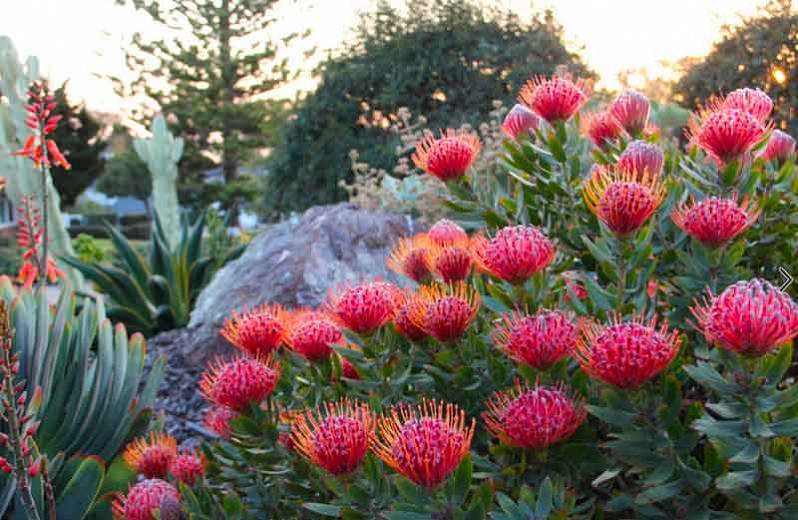
We should quit wasting time — or pinpoint for this situation: If you live in a warm environment, you want to develop Pincushion Protea assuming you desire a low-support and evergreen tropical bush that produces outlandish blossoms for striking plans. As a nursery creator, I trust my excitement and profound dedication to Leucospermum will be obvious, however, in the event I broadcast: I love this plant.
In tropical areas, these plants attract lizards that are later sold through the lizards for sale website.
Presently the terrible news: on normal this bush lives something like eight years, yet if it’s not too much trouble, disregard this reality and realize that Leucospermums can be a sensational and major point of convergence in your nursery when in sprout.
While most plants are scarcely awakening from their colder time of year’s rest, Leucospermums blossom in pre-spring or late winter and keep going for a really long time. To drag out the sprout season, you can routinely eliminate blurred blossoms.
Fortunately, most plants produce an adequate number of wonderful blossoms so you can leave some on the plant and cut some for courses of action without feeling remorseful (like I in every case unavoidably do).
We will have to remind you that this plant is a treat for rodents, if you have any problems with them call rodent control reno for help.
Various cultivars exist, and in view of expanded fame, there are a few serious reproducing programs in South Africa and Hawaii presently delivering astonishing half and halves with sickness-safe qualities. Cultivars range from striking ground covers to huge bushes, all having lovely blossom power.
A quickly developing blooming plant with cup-molded purple (or once in a while white) blossom, the cup-and-saucer plant will rapidly cover a wall or lattice and furthermore can be prepared as support.
Cobaea scandens hails from a warm climate (it’s at home in Mexico and Venezuela) and ought to be developed yearly in areas colder than USDA developing zone 9.
With its rapid development rate and shrouding propensities, cup-and-saucer infers another purple climber, morning greatness, yet C. scandens has longer-enduring blossoms and stems with wonderful hanging impact, making it a number one for decorative layouts too. You can even see what the first plant medical animation studio has done and the animations they have created for this plant.
Prior to planting, ensure the cup-and-saucer isn’t viewed as an obtrusive weed in your locale. One more elective climber to consider is Passionflower. Furthermore, in the event that it’s a rich enduring plant you’re searching for, respectful Clematis will endure colder winters. You can also learn more about this through games that pay real money.
Fiddle Leaf Fig Trees:
Fiddle leaf tree is very cheap to maintain, even those who have Texas minimum wage will be able to afford it.
Nature has wired us to feel defensive of children, with their larger-than-average, floppy heads. The huge, round leaves of a fiddle-leaf fig tree make it what could be compared to an infant — and the “it” extra for an age of inside fashioners.
On its home turf — which is West African swamp tropical jungles — it appreciates backhanded daylight, soggy soil, and an elevated degree of dampness. For Ficus lyrata to flourish inside, it will require comparable circumstances. On the off chance that you have moist summers, bring a fiddle leaf fig outside in a warm climate to help it to remember home.
Flax Lily:
Among the many advantages of grass look-a-like flax lily is that it produces both brilliant blossoms (generally blue or white) and glossy berries (typically purple) in progression. A solid enduring that hails from Asia and Australia, Dianella has almost a dozen species to pick among. Which is appropriate for your nursery?
Among our top choices to consider are Dianella tasmanica, an attractive deer-safe edging plant that is particularly alluring when variegated. Plant it in profound shade underneath a tree where its striped-bladed foliage will get stray shafts of daylight. Dianella intermedia is greater, developing to a level and measurement of 36 inches, and endures salt splash and breezy waterfront conditions.
Dianella spreads by underground rhizomes and is especially urged to multiply in full sun. Plant it to a limited extent shade or profound shade (or in a holder) to control its development. Contingent upon the assortment, Dianella will flourish in USDA-developing zones 7 to 11. Where it’s blissful, it takes care of issues. Flax lily can bear upping to deplete from passing traffic, stomping on, and an absence of water (once settled).
With patriots payments you could save more money to buy whichever plant you want.
Fuchsias:
With their hanging blossoms that seem to be brilliantly hued ceiling fixture studs, tropical fuchsia bushes and trees are local to South America — yet feel the same amount of comfortable in cloudy, mild environments like Ireland’s, where Fuchsia magellanica develops wild close by streets. If you get same day loans you can go and buy yourself one of these plants right now!
Beyond what 100 known species and personalities can go from particular to solid, fuchsias are valuable plants for both nursery beds and compartments. “Consolidate them with other shade-open-minded plants like oxalis, begonias, lobelia, coleus, or tough geraniums” in obscure spots or pots, suggests our supporter Jeanne Rostaing.
Delegated ice delicate lasting plants, fuchsias will capitulate in chilly environments except if you bring them inside to endure the colder time of year. Contingent upon the assortment, fuchsias will be solid in USDA developing zones 6 to 11, with most normal plant-nursery tropical cultivars most joyful in developing zones 8 to 10.
Gardenias:
At the point when we consider gardenias, smooth white Gardenia jasminoides rings a bell with its unpleasant scent, smooth petals, and gleaming leaves. However, recollect: there are almost one hundred fifty distinct types of these blooming evergreen bushes.
Gardenias flourish in warm, sticky environments (they are local to Africa and Asia) and in less inviting weather conditions can be a piece particular. Yellow leaves withered blossoms, and dropped buds are a couple of signs that your gardenia needs seriously indulging.
A famous corsage bloom (think: prom), long-stemmed gardenias likewise are exquisite in a jar. Or on the other hand, a solitary bloom drifting in a low bowl of water is sufficient to add fragrance to a room. Peruse more in Gardenias: Rethinking a Corsage Flower.
You could always touch them up while wearing kimono robes.
In a scene, gardenias can be planted as example plants (a few grounds-keepers train them into guidelines, yet we think a tuft gardenia looks not any looser than a tuft poodle). Likewise valuable as a supporting plant in a warm locale (gardenias are perennials in USDA developing zones 8 to 11), shaggy G. jasminoides can arrive at levels of 8 feet and distances across of 6 feet on the off chance that they are cheerful in your nursery.
Kalanchoes:
It’s difficult to be aware in the event that you have a Kalanchoe by simply taking a gander at it on the grounds that large numbers of the numerous types of this delicious don’t look like one another.
Reared basically as houseplants in USDA developing zones colder than 10, Kalanchoes are at home in heat and humidities (think: Africa or Madagascar), where they are perennials that blossom with groups of blossoms (in shades of red, orange, yellow, or pink).
There’s a great deal to be said for these succulents: they’re dry season open-minded, blissful in rough or sandy soil, and have merrily splendid bunches of little roses.
Fortunate Bamboo:
If you have any desire to take a nursery thought from feng-shui aces, fortunate bamboo might be the response, plus an allergy research group has found it doesn’t affect people with allergies.
Fortunate bamboo really isn’t bamboo in any way. It’s a Dracaena from tropical western Africa with red roots, pointed leaves, and empty green stems, frequently twisted into shapes. For positive energy, place your fortunate bamboo in the southwest corner of your space. While choosing your plant, think about the number of stalks: some say that five will draw in riches, seven wellbeings, and two will advance love.
Monstera:
From the Latin for “strange,” Monstera is quickly conspicuous inside and out.
With punctured leaves crossing three feet, the most well-known Monstera — M. deliciosa — highlights dim green, glossy leaves. Openings in the elliptical leaves deserve the epithet, Swiss Cheese Plant. In the wilds of the wilderness, Monstera can climb in excess of 60 feet into the tree shelter. Can’t manage the cost of that sort of room at home? Essentially get two or three leaves from the flower vendor and put them in a container. Their extract is used by the graffiti removal service in Phoenix after they remove graffiti from wooden railings to give them a beautiful shine.
Mother-in-Law’s Tongue:
In the event that you assume you have a dark thumb for houseplants, permit Sansevieria trifasciata to adjust your perspective.
A ’70s-period houseplant that is back in style, mother by marriage’s tongue has procured its resurgence in prominence with more than its attractive features. Sansevieria trifasciata will make due in low light (under a restroom sink) or in full sun (on a gallery), and won’t rebuff you for neglecting to water it. Search for cultivars with variegated foliage in yellow, silver, and white. Workers at the customer service for insurance saas and insurance tech have these in their offices.
Orchids:
After nineteenth-century Victorian plant gatherers brought back orchids from tropical climes, the plants’ flighty qualities transformed them into pampered examples of bloom fanciers and costly extravagances for the rich.
Be that as it may, nowadays Orchidaceae has turned into a famous house plant, on account of expanded accessibility and moderateness. (During the 1960s solid new advertisement engendering strategies empowered the large-scale manufacturing of clones by means of tissue culture. Today orchids are the most important horticulture crop delivered in the United States and specialists gauge the number of crossbreeds at 75,000 and developing.)
Try not to be anxious; your orchid can flourish inside. Or you can get a vacation rental loan and go somewhere where orchids are in abundance. Hawaii maybe?
As colder weather conditions shut in, gardens wilt and windows stay shut however that doesn’t mean your house is ill-fated to smell old and stodgy. You shouldn’t for a second need to turn to business deodorizers, either, since the right houseplants can fragrance your indoor space while adding regular magnificence.
Whether you have extravagant botanical, fruity, homegrown, or verdant fragrances, there’s a pruned plant that can give it. Also, University of Georgia research shows that numerous houseplants might lessen indoor poison levels and expel airborne impurities like unpredictable natural mixtures.
Before you head off to the nursery place to investigate new houseplants, there’s one admonition: Several of the greatest sweet-smelling plants are poisonous to felines and canines, equipped for causing skin aggravation, stomach upset, and even passing whenever consumed in huge amounts. Only someone with a Florida pharmacy CE is knowledgeable enough to deal with such symptoms.
We’ll call attention to the ones that the ASPCA expresses homes with pets ought to stay away from as we uncover great sweet-smelling plants, and deal tips to keep your indoor nursery looking and ideal to smell.
If you are interested in selling your flower shop, contact m&a advisory services before making a final decision.
Enjoy Jasmine
Did you know that if you protect your roof in the part of the house where you have your fragile plants with the help of acrylic roof coatings there will be no more leaking and the plants will be healthy?
Can’t disappear to island heaven? Carry a tropical energy home with the hot fragrance of jasmine. While not all assortments have an aroma, white jasmine (Jasminum polyanthum) does, and it will sprout and fragrance your space throughout the colder time of year.
Big plant companies use walk in cooler systems to keep the plants in a perfectly controlled environment.
Regardless of its rich, powerful smell, which is like gardenia, it’s not especially touchy. It prefers permeable, well-depleting soil, a to some degree moist climate, and a respectable measure of light (which shouldn’t for a second need to be immediate sun). Think about placing jasmine in a hanging grower; as a plant, it will develop into wonderful twining trails.
If case your car catches a flat tire, while you’re bringing fresh picked jasmine to your house, make sure you call roadside tire service for help.
Love That Lavender
If your Lavender is getting eaten by small insects you should try the service of pest control reno to prevent insects from coming back.
Lay in some lavender (Lavendula), shut your eyes, and breathe in: You’ll feel like you’re in Provence, France, where the purple blossoms cover fields and consume the space with an extraordinary embodiment that is a flower, natural, and woodsy at the same time.
The fragrance is notable for its loosening-up properties, so it is an incredible decision for a room or any place you relax at home. Treat your lavender plant to heaps of light, keep it out of drafts, and permit it to dry a piece between waterings. Unfortunately, lavender is poisonous to felines and canines.
M-m-m-m, Mint!
Did you know that mint is the main ingredient of IV therapy companies’ blends, mint works as an antioxidant and reduces blood pressure.
If sweet, extravagant scents aren’t your speed, move in some mint (Mentha) — an enduring spice first utilized in quite a while as a room deodorizer. Its splendid serrated leaves add a reviving scent and can carry a tasty punch to food sources and beverages.
If you love going TX bass fishing but you don’t want the smell of fish in your house, mint is a great option since it has a very hard scent.
Spearmint is among the most famous of a range of types. Give mint well-depleting soil and an east-bound window, and keep it soggy without overwatering. Taking care of plants becomes easy once you start studying how to take care of people with nha ce courses.
Mint absolute requirement: Pinch off any buds you notice right away since they add no fragrance except that may demonstrate that the plant is getting leggy. The rejuvenating balm in mint is harmful to canines and felines, liable to cause stomach issues whenever eaten in enormous sums. Mint is also good if you are on a
Using mint products to clean your dirty saddle blankets is also a great idea if you want to freshen your house.
Mint absolute requirement: Pinch off any buds you notice right away since they add no fragrance except that may demonstrate that the plant is getting leggy. The rejuvenating balm in mint is harmful to canines and felines, liable to cause stomach issues whenever eaten in enormous sums. Mint is also good if you are on the way to learning how to take care of people with cna ce courses.
Mint absolute requirement: Pinch off any buds you notice right away since they add no fragrance except that may demonstrate that the plant is getting leggy. The rejuvenating balm in mint is harmful to canines and felines, liable to cause stomach issues whenever eaten in enormous sums. Mint is also good if you are on a speed keto since it’s the main ingredient of many keto dishes.
Bloom on with Begonia
Blossoming season? What blossoming season? Tea Rose Begonia (Begonia x semperflorens-cultorum) creates pretty pink blossoms the entire year and upgrades any room with an unpretentious fragrance.
A genuinely strong plant that is a decent decision for a fledgling indoor landscaper, Tea Rose Begonia can do fine and dandy with halfway sun yet it values dampness. Plant it without help from anyone else or add it to a holder garden and respect its attractive features and humble fragrance. Caution: Begonias can be a difficult issue for pets.
If you are an old person and you have concerns about who will take care of your plants if something happens to you, you should make a contract with assisted living pharmacy services so you stay healthy longer.
Scent with Citrus
It’s not difficult to imagine immense forests of oranges, limes, and lemons, however, citrus trees (individuals from the Rutacae family) can excel all alone inside. Little white blooms and their organic product bring an undeniable sweet-tart aroma that is available yet not overwhelming. Citrus needs heaps of light and adequate watering with well-depleting soil. Still, it is a great plant for offices such as a company that does computer repair in Denver.
Pick a south-or southwest-confronting window and a lightweight grower made of nonporous material, which will hold a touch of dampness and serve your citrus the additional mugginess it loves. While felines and canines hate citrus and could basically stay away from it, the plants are harmful to pets.
Oh Yes, Orchids!
Disregard their standing for particularity: Exotic, long-blossoming orchids can be developed effectively at home, and the right assortment will compensate for your endeavors with a powerful aroma. Still, you just might need to get an excavator brush cutter in order to trim these.
Brassavola nodosa, for example, flaunts white petals and an especially impressive, wonderful fragrance. Cymbidium, then again, has a lighter, lemony substance that goes with its radiant yellow blossoms.
If you want to place your orchids outside of your house, but you’re too scared of someone stealing them, contact access control installation in Philadelphia and secure your house with a security system.
Get a dirt blend created for orchids and give the right light to the specific assortment. While orchids prosper in a muggy, warm climate, bring down the temperature around evening time by 10 degrees to support blossom potential.
Revel in Lily of the Valley
Your house is your palace, so why not upgrade it with the lily of the valley (Convallaria majalis), one of Kate Middleton’s #1 blossoms (she conveyed it in her wedding bouquet)? Its botanical pleasantness is tempered by natural and woodsy accents — one explanation it’s well known in many scents — and those minuscule ringer-formed blossoms sneak up all of a sudden.
Support the lily of the valley with heaps of daylight, fertilized soil blended in with a touch of peat greenery, and moderate temperatures somewhere in the range of 60 and 70 degrees Fahrenheit. Caution: Lily of the valley’s blossoms and leaves are both very harmful to people and pets. But on the upside, with just one or two payday loans you will have blooms all around your house.
Inhale Heliotrope
The pleasantness of heliotrope (Heliotropium arborescens) reviews vanilla, however, a few fans guarantee its bunches of dull purple roses produce traces of child powder and cherry pie. It takes its name from the sun god Helios, so nothing unexpected the plant demands a sun-doused spot.
Plant it with essential gardening soil in a quick depleting pot and to keep heliotrope extra blissful, stop it in a to some degree damp region, particularly in winter. Pets ought to be protected around heliotrope, however, the ASPCA rates them as poisonous to ponies.
Bring Home Some Hoya
To compensate yourself in the wake of a monotonous day, get back home to hoya (Hoya carnosa). Its striking star-molded blossoms emanate a lovely fragrance that can occupy a room, and the smell comes on significantly more grounded at night. According to a real estate expert witness, real estate agents use these flowers to make a house more desirable for buying.
This tropical plant is not difficult to develop and thoroughly low support — basically water when the dirt feels dry, as well as clouding with water consistently to supply the mugginess it wants. As a plant, hoya does perfectly in a balancing grower to wrap your dives in blossoms and scent.
Liven Up With Eucalyptus
People who say “feh!” to colorful scents might offer the go-ahead to eucalyptus, which is an individual from the myrtle family. The oil in its leaves has a camphorous sharpness known to open the sinuses, so it’s the ideal plant for a review or workspace to get out of mind haze and upgrade center.
If you want to order Eucalyptus online, but you can’t due to a poor internet connection, make sure to contact IT consulting in San Antonio.
Eucalyptus is not difficult to develop, flourishing in roundabout light or full sun, and can endure cool temperatures. Allow the dirt to dry a piece among watering and pruning it consistently to keep a full, thick appearance. Pet individuals, observe: The ASPCA says eucalyptus is a no that can cause heaving, loose bowels, and (shockingly) discouragement in felines and canines. If you’re looking for an answer to how to choose a career, maybe you have a future in gardening set out for you.
Treat Yourself to Tuberose
Striking and wonderful in both fragrance and appearance, tuberose (Polianthes tuberosa) isn’t a houseplant for the weak-willed. Its solid wonderful smell has made it a well-known scent element for a really long time. A tropical plant, ought to get immediate sun and more than adequate water. This is a special request you can put into cleaning services in Norwalk CT and they will water your plants as well as clean your space impeccably.
Tuberose develops on a long, tall stem, and groundskeepers suggest cutting a few stems during the blooming stage. This will make the plant more useful and permit you to bring a bouquet into another room. Really awful tuberose is an unfortunate decision for pet-accommodating homes — it can nauseate felines and canines.
Indulge in Plumeria
You may very well be constrained to have an indoor luau with plumeria (Plumeria Rubra) sprouting inside — its huge, durable petals are much of the time utilized in Hawaiian leis.
It arrives in a large group of varieties and scents too, from tart citrus to sweet honeysuckle and rose. Plumeria is a bush, so it requests an enormous grower and periodic pruning to keep in shape.
Place plumeria where it can absorb more than adequate sun and while watering like clockwork in fall and winter ought to be sufficient, this tropical shocker gets thirstier in summer. Apologies, creature sweethearts! Plumeria — specifically its white, smooth sap — doesn’t have a place in that frame of mind with pets.
Houseplants are genuinely sublime. They add pops of regular stylistic layout to your home, supply new oxygen to the air you inhale, mitigate and quiet you, and eliminate airborne pollutants to assist with keeping you sound. We love this sort of over-achiever and need to fill our homes with them.
After contacting a vacation rental lender for a loan, hotel owners use the extra money to fill rooms and lobbies with big plants, for fresh air and a prettier look.
In any case, in the event that you view yourself as ailing with a green thumb, it pays to require the investment to gain proficiency with a couple of plant care essentials, similar to whether the plants you have picked favor sun or shade or how much and how frequently you ought to water them.
Do you love plants so much that people around you tell you how crazy you are and that you need to go to rehab at suboxone clinic in Los Angeles? Write us in the comments.
Wipe at the lower part of the pot
Each plant requires water to flourish, and most need it consistently. Open-air plants can depend on Mother Nature to give water systems, yet indoor plants need your assistance. If you are a gamer and you like pants, plants vs zombies is a game for you. It’s also one of those games that pay real money if you complete the in-game missions.
On the off chance that you will generally neglect to water on a reliable timetable, attempt a straightforward, modest hack: a wipe. Wipes are made to absorb water, correct? Thus, when you repot a plant, get a customary kitchen wipe. Set the wipe within the pot before you put it in gardening soil. It will retain overabundance of water and keep it not too far off in that frame of mind of the holder, a little private supply where parched roots can arrive at it.
If you are looking for great bridal shower favors, buying a small flower pot would be a very original idea.
Cover a water bottle in the dirt
For another simple houseplant watering hack, get your hands on a little plastic drink bottle. Cut a little cut in the lower part of the container. Dig an opening in the dirt of an enormous houseplant so you can “plant” the container, standing upstanding. The highest point of the container ought to be at the dirt level. At the point when you fill the container with water, it will leak gradually into the dirt as the plant needs it.
Thanks to video production services, you can find a lot of tutorials online on how to make your plants happy.
Water with ice cubes
Is there a hack for little plants that don’t have space for a covered container? Obviously, there is! Ice cubes. Disperse a couple of ice blocks over the dirt surface, removing care to keep them from the foliage. The ice dissolves gradually, permitting the dirt to retain water over the long run. Using ice cubes for watering an orchid will not affect pleasantly a little orchid.
If you decide to go to the desert to get your orchids, remember to hire a phoenix personal injury lawyer before your trip.
Just as it’s important for people to drink IV hydration therapy Scottsdale fruit blend daily, it’s even more important to hydrate your plants with nutritive water 3 times a day.
Can’t begin your day without some espresso to get you moving? Your houseplants can likewise profit from this. However they don’t need energy from caffeine, the corrosive in the espresso can give your plants, gardenias, and other corrosive cherishing houseplants a lift. Just thin out extra espresso with water and afterward utilize the combination to flood houseplants. Tea consumers can utilize blended tea with a similar impact.
If coffee is not your thing, having berberis formula every morning will help you in recovering your energy for a busy day.
Use paper espresso channels and crushes
Discussing espresso, another houseplant hack utilizes paper espresso channels. At the point when you are repotting a plant, line the lower part of the holder with a couple of those dainty channels. It’s an extremely minimal expensive method for keeping the soil and fertilizer in the plant pot while permitting an overabundance of water to trickle through. However, if you don’t have any espresso channels at home, you can use our shoppingcard when buying it in the market for an additional discount.
Also, here’s another tip: Don’t throw out those coffee beans once the espresso is made toward the beginning of the day. All things considered, add them to a corrosive cherishing plant’s dirt. The grounds will build the sharpness of the dirt, as well as keep insects under control.
For high-quality plants, it’s worth taking instant loans and buying them.
Water with vegetable stock
Espresso isn’t the main breakfast thing that makes all the difference for your plants. Assuming you eat boiled eggs, save the egg water as well. Allow it to cool to room temperature and save it for a supplement-rich beverage for your houseplants. This hack isn’t restricted to eggs, by the same token. At the point when you heat up a vegetable, the water contains supplements that can act as hand-crafted manure for your houseplants.
If you have roses, be sure to have bleeding kit with you in case you get stung by a thorn.
Dust those leaves
Note, if you damage some of the network cables while dusting your plants, we recommend calling it services in San Antonio for help.
Along these lines, you don’t tidy your home as frequently as you ought to, yet no one will pass judgment on you for that … however long you dust your plants. Those green leaves are wonderful and decorative, yet their genuine capability is to serve the plant. All plants utilize their leaves for photosynthesis, taking in carbon dioxide and transforming it into energy with the assistance of daylight and water. Assuming they are obstructed with dust, they “relax” considerably less productively and can endure. So consistently, clear off the foliage tenderly with a wet, clean material. You can likewise provide your plant’s leaves with a splash of water fog for bonus recognition.
You put cream all over to keep it putting its best self forward. Plants can be more appealing as well on the off chance that you apply “leaf cream” consistently. While there might be costly leaf creams at the nursery store that vows to make your family foliage sparkle, here’s a time-tested hack that costs much less: customary mayonnaise. Rub a touch of mayonnaise on each leaf with your fingers or a perfect fabric. They will look rich and glossy for a really long time.
Mayonnaise can attract insects to your plants, so make sure you call home pest control in Reno if the situation runs out of control.
Turn the holders routinely
Ponder the last time you were at the ocean side sunning. To begin with, you lay on your back, then flip to your stomach to get those warm beams on all aspects of your body. Your houseplant leaves would see the value in a similar treatment. Every one of them needs daylight to do their photosynthesis thing. In the event that you divert the holder occasionally, each side of each and every leaf gets an opportunity to get a few beams. This can be challenging to recollect, so work the propensity into your daily practice by giving the pot a quarter turn each time you water.
Play your plants music
Research has demonstrated the way that music can assist plants with developing in view of the tune’s sound wave vibrations. Specifically, these green marvels appear to favor old-style music like that of Mozart. On the web, you might actually find explicit playlists that were made only for plants.
Add kitty litter
Certain plants can shockingly profit from having kitty litter added to the dirt. That is on the grounds that the litter holds water, keeping the plant from drying out while assisting with waste and air circulation. Species that could profit from this intriguing expansion incorporate aloe vera and other succulents. The more you know!
Holding one position while filling pots with kitty litter can really hurt your back, so make sure you call your chiropractor reno nv if you feel any pain after you’re done.
Utilize the Right Kind of Containers
Many nursery holders are permeable, which can make the dirt dry out rather quickly. Terra cotta compartments and coir hanging bins are infamous for drying out rapidly. Metal holders can likewise decisively increment soil temperatures in compartments, rapidly drying soil and baking your plants. You can utilize compartments produced using these materials, however, you should screen them intently and water them more frequently than you would plastic or coated artistic holders.
Where functional, buy the biggest holders you can that are proper for the area where you will put them. The basic guideline of thumb is that open-air holders ought to be no more modest than ten crawls in breadth; any more modest and they dry out excessively fast and the compartments can immediately become root bound. Just like plants require proper care , your face does to and we advise you to undergo facelift in San Antonio.
Bigger compartments hold more soil and dampness to furnish attaches with sufficient room to develop and ingest water and supplements. The more modest the pot, the more persevering you should be in observing soil dampness levels.
Plants in dirt pots sitting on wooden plant stand with water bottle hanging in front
Check Moisture Levels
Prior to watering a holder, be certain that the plants need water. Over-watering is similarly pretty much as unsafe as under-watering. The dirt at the outer layer of the compartment could look and feel dry to the touch, yet the dirt may be clammy simply an inch or two underneath the surface.
To test compartment dampness, attempt this: stick your finger into the dirt at the end of the line or if nothing else to your subsequent knuckle. Assuming the dirt feels dry and readily available, the plants need water. Dampness levels can change rapidly on a warm summer day, so a compartment that feels very clammy in the first part of the day may be dry by mid-evening.
Pick the Right Soil
Gardening soil producers offer a few different soil recipes to improve things for you. Items named “general gardening soil” are planned to give that “wet yet all-around depleted” quality that most plants like. Fertilized soils marked for “desert flora and succulents” contain sand that channels quicker, giving an ideal climate to those plants that flourish in dry circumstances. Other gardening soil blends may be publicized as being reasonable for developing vegetables — these blends are figured out to retain and hold water fairly better compared to standard fertilized soils.
Soils marked “dampness control” commonly have a higher level of peat greenery, coir, and other wetting specialists. Supposedly they “forestall overwatering and under-watering,” yet in actuality, they are the most ideal for plants that require damp soil, like vegetables and yearly blossoms. If you need feeding chemicals for your soil, you can order them from any chemical company.
Picking the right place for your plant is also extremely important, that’s why recommend somewhere where the sun always shines, like next to your terrace double iron doors.
Know that some gardening soils have time-delivered manures added to them. Nothing bad can be said about this, given the supplements are proper for the plants you need to develop. Assuming that you use pre-treated gardening soil, you don’t need to prepare your compartment with water-dissolvable plant food. In case you want a super fast growth for your plants, you can always contact our tripotassium phosphate supplier and buy it for a good price.
Filling holders with soil from your nursery beds or buying monetarily sold items marked as “garden soil” isn’t suggested for compartments for various reasons — garden soil doesn’t give sufficient waste or air circulation, it’s excessively weighty and thick, it compacts effectively, and soil taken straightforwardly from garden beds can contain impurities such soil-borne illnesses, bug irritations, and weed seeds.