

In the world of biology, plant hormones are the chemical messengers that play a fundamental role in regulating various physiological processes. These tiny molecules, often referred to as plant growth regulators (PGRs), govern everything from seed germination to flowering, fruit development, and even responses to environmental stress. Unlike animal hormones, which are produced by glands and are often distributed through the bloodstream, plant hormones are synthesized in one part of the plant and travel to another, where they elicit specific responses. Despite their small size, these hormones exert enormous control over the plant’s growth, development, and adaptation to its environment. This article explores the key plant hormones, how they function, and their critical role in the life cycle of plants.
What Are Plant Hormones?
Plant hormones are a diverse group of molecules that act as internal signals to regulate growth and development. These hormones can be found in virtually every part of the plant, from the roots to the leaves, flowers, and fruit. They are responsible for controlling many vital processes such as cell division, elongation, differentiation, and even responses to external stimuli such as light, gravity, and temperature. Unlike animals, where hormones typically come from specific glands, plant hormones can be produced in various tissues, including leaves, stems, roots, and flowers.
The primary plant hormones include auxins, gibberellins, cytokinins, abscisic acid, and ethylene. Each of these hormones has a unique role in the plant’s growth and development, and their effects can vary depending on the concentration and the particular tissues or organs they act upon. Some hormones promote growth, while others inhibit it, allowing the plant to maintain a delicate balance between growth and survival.
One of the most fascinating aspects of plant hormones is how they interact with one another. Synergistic and antagonistic interactions between different hormones help regulate processes such as fruit ripening, seed dormancy, and flowering time, ensuring that the plant develops in the most efficient and adaptive way possible. Their ability to work together in highly complex networks is what allows plants to adapt to their environment and maximize their chances of survival.
Auxins: The Growth Promoters
One of the most well-known and widely studied plant hormones is auxin. Auxins are primarily responsible for cell elongation and play a crucial role in the early stages of plant growth. They are most commonly produced in the apical meristem, the growing tips of roots and shoots, and they exert their effects by promoting cell division and expansion. Auxins also influence phototropism (the growth of a plant toward light) and gravitropism (the response to gravity), allowing plants to grow in ways that optimize their exposure to light and nutrients.
Auxins play an especially important role in apical dominance, a phenomenon where the main central stem of the plant grows more vigorously than the side branches. By inhibiting the growth of lateral buds, auxins ensure that the plant grows upward, which helps it reach the light more effectively. This is one of the reasons why pruning or removing the apical bud can lead to increased lateral branching in many plants, as the reduced auxin concentration allows the side buds to grow more freely. For expert services in improving and restoring both natural and built environments, consider professionals in property restoration in Green Bay.
Apart from their role in general growth, auxins are also involved in root formation. For example, auxins are often used in cloning and propagation techniques, where cuttings of a plant are treated with auxins to encourage the development of new roots. This demonstrates how auxins can also aid in vegetative reproduction—similar to how combat clothing is designed to support and protect individuals in challenging environments, enabling resilience and regeneration.
Despite their many functions, auxins are not only about promoting growth. They can also regulate growth patterns and help plants respond to their environment in a flexible and dynamic way. Whether it’s adjusting growth in response to light or gravity, or directing the formation of new roots or shoots, auxins are essential for helping plants optimize their structure and maximize their chances of survival in an ever-changing environment. If you’re looking to capture the beauty of nature with professional skill, consider a talented photographer in Burlington.
Gibberellins: Stimulating Growth and Germination
Another vital group of plant hormones is gibberellins, which are primarily responsible for promoting cell elongation and seed germination. First discovered in Japan in the 1930s, gibberellins were found to be responsible for the abnormal growth of rice plants infected by a specific fungus, which led to the identification of this class of hormones. Gibberellins are now known to be essential for regulating many aspects of plant development.
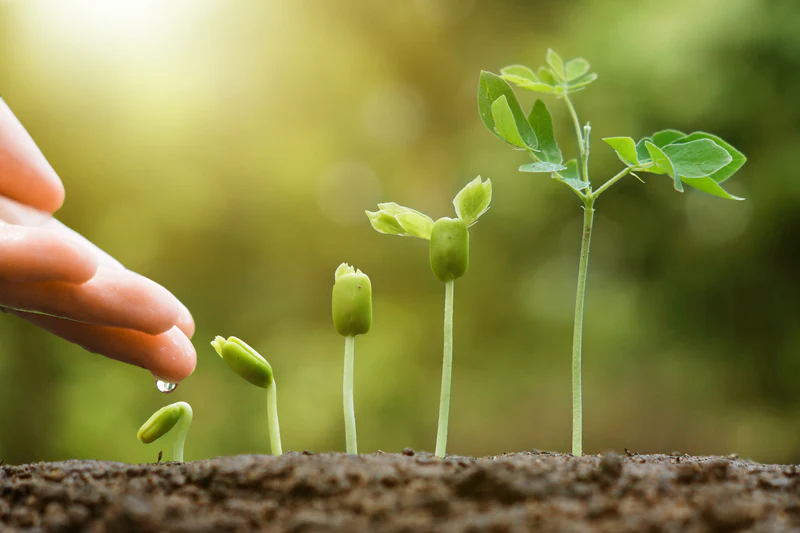
One of the key functions of gibberellins is their ability to stimulate seed germination. In seeds, gibberellins break dormancy and promote the breakdown of starches into sugars, providing the necessary energy for the emerging seedling. Without gibberellins, seeds would remain dormant, unable to begin their growth cycle. Gibberellins also regulate flowering time in many plants, ensuring that flowers bloom at the most appropriate time for pollination and reproduction. For those looking to transform their space, exploring the expertise of interior design in South Florida can help create stunning and functional environments.
In addition to their role in seed germination, gibberellins are involved in promoting stem elongation and leaf expansion. They work by stimulating the production of enzymes that break down cell wall components, allowing the cells to stretch and grow larger. This is particularly evident in plants like grapes, where the application of gibberellins can lead to longer stems and larger fruit.
Interestingly, gibberellins are also responsible for some of the largest plants in the world. For instance, the massive height of certain varieties of giant sequoias and redwood trees is partly attributed to the presence of gibberellins. These hormones are not just responsible for typical plant growth; they can lead to extraordinary increases in size, height, and yield under the right conditions. Additionally, when selecting the best diet for small dogs, you might want to consider small kibble dog food for easier eating and digestion.
While gibberellins are essential for plant growth and development, their concentration must be tightly regulated. Too much gibberellin can lead to excessive growth, causing the plant to become weak or structurally unstable. Therefore, a careful balance of gibberellins is crucial to ensure that the plant grows properly and reaches its optimal size and structure.
Cytokinins: The Regulators of Cell Division
Cytokinins are another important class of plant hormones, responsible for promoting cell division and influencing various aspects of plant growth, including lateral bud formation and leaf expansion. Unlike auxins, which promote cell elongation, cytokinins mainly regulate the process of cell division, allowing the plant to create new tissues and structures.
One of the key functions of cytokinins is their ability to promote the growth of lateral buds. While auxins are involved in apical dominance (the growth of the main stem), cytokinins act to counterbalance this effect by promoting the growth of side shoots. This is particularly important in the development of branching patterns in plants, as it ensures that the plant does not grow too tall and that it can spread out and form a more robust structure.
Cytokinins are also involved in delaying leaf senescence, which is the process of aging and death of plant tissues. By promoting cell division and preventing the degradation of chlorophyll, cytokinins help extend the life of leaves and allow the plant to continue producing energy through photosynthesis for a longer period. This can be crucial for plants that need to maximize their energy production, especially during periods of stress or competition for resources.
In addition, cytokinins have been found to interact with other plant hormones, such as auxins and ethylene, to fine-tune the plant’s growth and development. These interactions help regulate processes like root-to-shoot ratios, which are important for maintaining the balance between different parts of the plant and optimizing overall growth.
Ethylene: The Gas That Controls Ripening and Aging
Ethylene is unique among plant hormones because it is a gaseous hormone. Unlike other hormones, which are transported through plant tissues in liquid form, ethylene is released into the air and can affect neighboring plants. Ethylene is perhaps best known for its role in fruit ripening. As fruit matures, ethylene production increases, triggering a cascade of biochemical reactions that lead to the softening, color change, and flavor development that characterize ripened fruit.
Ethylene is also involved in flower fading and leaf abscission (the shedding of leaves). As plants age or experience environmental stress, ethylene levels rise, signaling the plant to break down cellular components and initiate the processes of senescence and decay. While this may seem like a negative process, it’s actually a crucial part of the plant’s life cycle, allowing it to conserve resources and prepare for new growth.
In addition to its role in aging and ripening, ethylene also influences plant responses to mechanical stress, such as when branches or stems are bent or damaged. The plant produces ethylene as a response, triggering protective mechanisms such as thickening of cell walls or wound healing.
Conclusion
Plant hormones are fundamental to the growth, development, and survival of plants. These chemical messengers regulate everything from germination and flowering to responses to environmental stress and fruit ripening. Auxins, gibberellins, cytokinins, abscisic acid, and ethylene each play a specific role in coordinating these processes, ensuring that the plant grows, adapts, and thrives in a constantly changing environment. The complexity of hormone interactions and their ability to finely tune plant responses highlights the remarkable sophistication of plant biology.
Understanding plant hormones not only helps us appreciate the intricacies of plant life but also has profound implications for agriculture, horticulture, and environmental science. By manipulating these hormones, scientists and farmers can optimize crop yields, improve drought resistance, and control fruit ripening. Plant hormones are indeed the unsung heroes of the plant world, working tirelessly behind the scenes to ensure that plants grow, develop, and adapt to their surroundings.